Buying Guide
Air delivery: CFM, PSI, and tool compatibility
For a 10‑gallon compressor the two most important performance numbers are continuous airflow (CFM) at a given PSI and the maximum PSI. Match the compressor’s CFM @ 90 PSI to the needs of your most demanding tool-finish nailers, spray guns and impact wrenches all have different requirements. Also check how quickly the tank recovers (pump speed) because that affects run time between cycles.
- Look for CFM specified at 90 PSI-this is the common comparison point for pneumatic tools.
- Higher max PSI gives more flexibility for specialty tools; many 10‑gallon units top out between 125-200 PSI.
- If you need sustained output for spray work, favor higher CFM or a model with faster recovery rather than relying only on tank size.
- Example of a reliable performer to compare specs with: Makita MAC2400.
Pump type and maintenance: oil‑free vs. oil‑lubricated
Decide between oil‑free and oil‑lubricated pumps based on how you’ll use the compressor. Oil‑free pumps are low‑maintenance and ideal for light shop or home use; oil‑lubricated pumps generally run cooler and last longer under heavy, continuous use but require periodic oil changes.
- Choose oil‑free for intermittent use, portability, and minimal upkeep.
- Choose oil‑lubricated for industrial or heavy workshop use where longevity under load matters.
- Consider the availability of replacement parts and ease of servicing-removable heads and replaceable valves simplify repairs.
Noise level and where you’ll run it
Sound matters if you’ll keep the compressor in a garage, attached shop, or inside a building. Compressor noise is measured in decibels (dBA); units marketed as “ultra quiet” are significantly more pleasant to work around. Plan for placement, vibration isolation, and either a quieter model or a sound enclosure if noise is a concern.
- Look for advertised dBA figures when noise matters-70 dBA and below is noticeably quieter than traditional compressors.
- Rubber feet, vibration mounts and wheels help reduce transmitted noise.
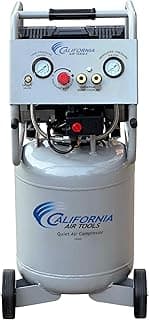
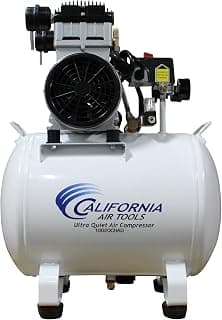
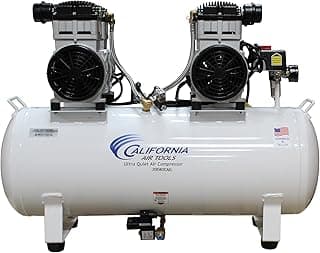
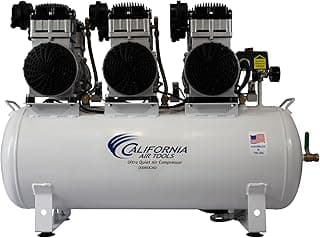
- If low noise is a priority, compare quiet models such as the California Air Tools 10020C for reference.
Portability and footprint
Ten‑gallon compressors come in different layouts-horizontal tanks, vertical tanks, and pancake styles-and weight and wheel options vary. Think about where you need to move the compressor and how much floor space you can spare. A heavier, full‑featured unit can be fine if it stays in one place; a lighter, wheeled or pancake model is better for jobsite mobility.
- Check total weight and whether the unit has durable wheels and a handle suitable for your terrain.
- Pancake compressors save floor space and are easier to store; horizontal tanks are typically more stable.
- Consider the height if you need to store it under shelving or in a vehicle.
Build quality, accessories and overall value
Durability comes down to materials, protective finishes, pressure relief safety features, and the quality of fittings. A good warranty and easy access to replacement parts add long‑term value. Also evaluate included accessories-quick‑connect couplers, air filters and pressure regulators can save extra purchases.
- Prefer welded steel tanks and corrosion‑resistant finishes for longer life.
- Check whether regulators and gauges are easy to read and replace; industrial‑grade quick connectors are more durable.
- Balance initial cost against expected lifespan and the features you actually need to determine true value-for-money.
For further comparisons on different models, check out our comprehensive best 20 gallon air compressor guide.
FAQ
What is the best 10 gallon air compressor for home use?
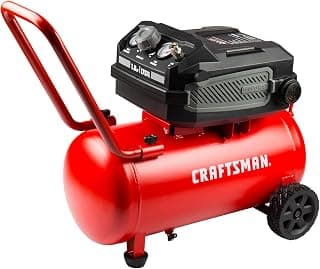
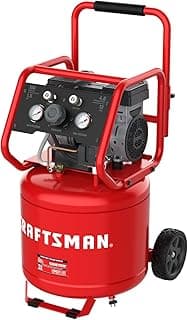
For most homeowners a 10‑gallon compressor that balances portability with enough short‑burst power is ideal for nail guns, tire inflation, and small spray jobs. Look for models with decent CFM at the PSI your tools require, wheels for mobility, and an easy tank drain. A reliable example to consider is Craftsman 10‑Gallon Compressor, which is positioned as a quiet shop option with user‑friendly features. Always compare the compressor’s rated CFM/PSI to your tools and choose one with some headroom for smoother operation.
Oil‑free vs oil‑lubed 10 gallon compressors: which should I buy?
Oil‑free compressors are lower maintenance, cleaner, and generally lighter, making them a popular choice for home and hobby use. Oil‑lubed compressors tend to be more durable under continuous or heavy duty cycles and run cooler, so they’re often preferred in busier shops. Pick oil‑free if you want minimal upkeep and occasional use; choose oil‑lubed if you expect long, repeated runs or need maximum longevity. Regardless of type, follow the manufacturer’s service schedule to avoid premature wear.
How much CFM and PSI do I need from a 10 gallon compressor for common tools?
Start by checking each tool’s required CFM at its recommended PSI-this is the most reliable guide. Light tools like brad and finish nailers need relatively low CFM and moderate PSI, while paint sprayers, sanders, and some impact tools demand higher continuous CFM. Aim for a compressor with a CFM rating above your highest‑demand tool and allow 20-30% extra headroom to avoid short cycling. If you plan to run multiple tools at once, add their CFM needs together to size the compressor correctly.
How long do 10 gallon air compressors last and how can I extend their lifespan?
With proper care a 10‑gallon compressor can last many years; typical lifespan varies with build quality and how heavily it’s used. Extend life by draining the tank after each use to prevent corrosion, changing oil and filters on oil‑lubed units, and keeping the unit clean and ventilated. Avoid running the compressor beyond its duty cycle and store it in a dry, temperate place to reduce moisture damage. Regularly inspect hoses, fittings, and safety valves and replace worn parts promptly.
Are expensive 10 gallon air compressors worth it compared to budget models?
Higher‑priced compressors generally offer better motors, stronger pumps, quieter operation, longer warranties, and higher sustained duty cycles, which pay off if you use them frequently or professionally. For occasional DIY tasks a budget model can be perfectly adequate, but expect more noise and possibly shorter service life. If low noise and low maintenance matter to you, consider quiet oil‑free options like the California Air Tools 10020C. Match features to your usage patterns-invest more for daily heavy use, save for light occasional work.
Also explore options with different tank sizes, such as the best 8 gallon air compressor and best 3 gallon air compressor, to find the right fit for your workspace and job requirements.
Final Verdict
After comparing ten 10‑gallon compressors, the strongest models separated themselves through steady airflow, durable pumps and tanks, quiet operation, and sensible portability. Buyers should prioritize CFM at working PSI, build quality (metal tanks and reliable valves), noise level, and oil-free vs. oil‑lubricated maintenance needs. The top performers combined consistent delivery under load, solid construction, and straightforward controls-features that deliver reliable, long‑term performance for DIY and professional use alike.
🏆 Best Overall: Makita MAC2400 Big Bore 2.5HP Air Compressor
💰 Best Budget: Craftsman 10-Gallon Oil-Free 4.0 CFM Air Compressor CMXECXA0331042
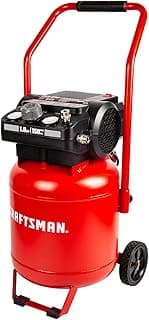
⭐ Best Premium: Craftsman 10-Gallon Quiet Shop 1.8HP Air Compressor CMXECXA0201041