Buying Guide
Power, PSI, and What You Actually Need
Check the maximum PSI and the compressor’s effective output for the tasks you plan to tackle. Passenger car tires typically need 30-35 PSI, while trucks, off-road tires, and air suspension systems require much higher pressures. For occasional roadside top-ups, a compact unit with a moderate max PSI can be fine; for heavy-duty use you’ll want a model rated for higher pressure and faster flow.
- Tip: If you’ll be inflating large truck tires or air bags, prioritize higher PSI and a compressor designed for sustained output.
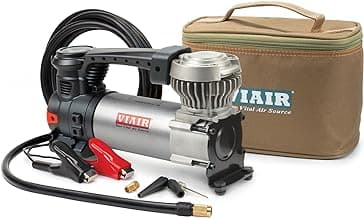
- Example: For high-pressure needs, consider a purpose-built unit like the VIAIR 444C, which is specified for continuous duty and higher PSI ranges.
Portability, Size, and Power Source
Think about where you’ll use the compressor and how you’ll power it. Compact, 12V plug-in units are excellent for in-car emergencies and are easy to store, while models with alligator clamps or long cords give more flexibility. If you need cordless freedom, check for battery-powered models or those that accept a vehicle’s battery connection-but be sure the power source matches the compressor’s requirements.
- Look for long power cords and hose length if you regularly check multiple vehicles or large wheels.
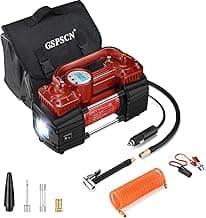
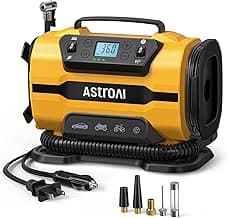
- Example: A compact 12V option with a clear digital gauge and car-ready power plug is the AstroAI AIRUN H, which pairs portability with useful features like an LED light.
Inflation Speed, Accuracy, and Pressure Gauges
Inflation speed determines how quickly you’ll get tires back to the correct pressure; look for models that balance speed with control. Accurate, easy-to-read gauges (digital or analog) and an automatic shutoff or preset feature help you avoid overinflation. If precise pressure is important-especially for performance driving or towing-choose a unit known for reliable readings and a precise shutoff. For more detailed comparisons of different compressor types, see our best electric air compressor guide.
- Tip: Digital gauges tend to be easier to read in low light; check for backlit displays or integrated LEDs.
- If you frequently inflate sports equipment or small inflatables, look for a kit that includes needle and adapter fittings.
Duty Cycle, Durability, and Build Quality
Duty cycle describes how long a compressor can run before it needs to cool down. For occasional use, short duty cycles are acceptable, but for repeated or extended inflation jobs choose a compressor with a longer or continuous-duty rating. Also evaluate construction materials, pump design, and customer reviews for signs of longevity and reliability.
- Metal housings and brass fittings typically outlast cheaper plastic components.
- Example: For heavy-duty and continuous use, the VIAIR 444C is commonly cited for robust construction and reliable duty performance.
Features, Ease of Use, and Value
Prioritize features that match how you’ll use the compressor: automatic shutoff, preset pressure, LED lights, included accessories, and storage solutions all add convenience. Don’t confuse price with value-an inexpensive unit may be fine for emergency top-ups, while a slightly pricier model with better build and quicker inflation can be a better long-term purchase.
- Compare warranties, included accessories, and replacement parts availability when evaluating overall value.
- Example: If you want a reliable, easy-to-use 12V inflator with a solid balance of features and price, the EPAuto 12V Portable Air Compressor is a common choice for everyday drivers.
FAQ
What is the best 12 volt air compressor for car tires?
If you want a reliable all-around 12 volt inflator for car tires, the AstroAI AIRUN H Tire Inflator is a common recommendation. It uses a 12V DC plug, includes a digital pressure gauge and LED light, and is small enough to keep in the trunk. That combination makes it quick for topping off daily-driving tires and handy for bikes or sports gear. Look for a model with an accurate gauge and a cord or clamps long enough to reach all wheels. If you need higher continuous duty or faster fill times, consider a heavier-duty option instead.
How do I choose between compact and heavy-duty 12V compressors?
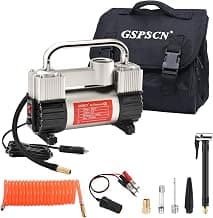
Decide based on how often and what you'll inflate: compact units are fine for occasional topping off and inflatables, while heavy-duty compressors are built for trucks, frequent use, or off-road recovery. Key features to compare are maximum PSI, how quickly the unit inflates tires, and the duty cycle (how long it can run before resting). Power connection matters too-cigarette-lighter plugs are convenient but alligator-clamp connections draw more current and work for dead batteries. Also check hose length, included nozzles, and whether the unit has an auto shut-off or a reliable pressure gauge. Choose compact if portability and low cost matter, heavy-duty if you need speed and continuous performance.
Are expensive 12V air compressors worth it?
Higher-priced compressors often deliver faster fill times, higher maximum PSI, heavier-duty motors, and longer continuous duty cycles. If you frequently run large tires, maintain air suspension, or need a compressor for work use, those upgrades can be worth the extra cost. For occasional drivers, a midrange portable unit usually covers basic needs at a much lower price. As an example of a premium option, the VIAIR 444C targets continuous-duty applications like air suspension and tanks. Match the features to how you use the tool rather than buying based on brand alone.
How long do 12V air compressors usually last and what affects lifespan?
Lifespan varies widely but depends primarily on build quality, how often you run the compressor, and whether you follow duty-cycle limits. Proper maintenance-keeping fittings clean, storing dry, and avoiding overheating-extends life significantly. Frequent short fills and allowing cool-down periods are better than long continuous runs that overheat the motor. Metal-bodied units and commercial-grade pumps generally hold up longer than cheap plastic models. If longevity is a priority, look for models and brands with a reputation for durable components and available replacement parts.
How do I set up and maintain a 12V tire inflator for safe use?
Start by reading the manual to confirm the power connection (cigarette plug vs. battery clamps) and any duty-cycle limitations. Inspect the hose and valve fittings for damage, attach the chuck securely to the tire valve, and set the target PSI on the gauge or digital readout. If the unit has auto shut-off, use it; otherwise monitor pressure and stop the compressor before it gets hot. After use, disconnect power, bleed any pressure from accessories, and store the pump and accessories in a dry place. Periodic checks for leaks, tightening fittings, and replacing worn hoses will keep the inflator reliable and safe.
Final Verdict
Top performers separated themselves with reliable pressure accuracy, higher airflow, robust construction and intuitive controls. When choosing a 12‑volt compressor prioritize max PSI and duty cycle, an accurate digital gauge, a sturdy hose/chuck, and a dependable power connection (cigarette plug or battery clamps). The best units combined solid metal or well-built housings, clear displays, automatic shutoff or reliable cutoff behavior, and useful LED lighting-traits that deliver faster, safer inflation and long-term dependability. For more options with different tank sizes and power options, you might also consider our guides on the best 6 gallon air compressor and the best 20 gallon air compressor.
🏆 Best Overall: AstroAI AIRUN H Tire Inflator with Digital Gauge
💰 Best Budget: DEWALT DCC020IB Tire Inflator 20V MAX with Auto Shut Off
⭐ Best Premium: VIAIR 444C Dual Air Compressor 200 PSI for Air Suspension