Buying Guide
Power & tool compatibility
Match a 110V air compressor’s motor and output to the tools you plan to run. The important specs are the compressor’s maximum PSI and its continuous airflow (CFM) at working pressure-these determine whether a nailer, impact wrench, or spray gun will run smoothly without the motor cycling constantly.
- Check the CFM requirement of your most demanding tool and choose a compressor that delivers that CFM at the tool’s operating pressure.
- Look for a model with a higher CFM or a larger tank if you’ll use continuous tools or multiple devices at once.
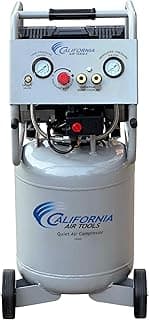
- For general garage and home projects, a reliable all-around option to consider is California Air Tools 8010, which balances steady output with 110V convenience.
Tank size, duty cycle, and runtime
Tank capacity affects how long you can run a tool before the compressor motor restarts to refill the tank. Duty cycle-how long the compressor can run over a period without overheating-matters for intensive tasks.
- Small tanks (1-2 gallons) work for short bursts: brad nailers, inflating tires, and airbrush work.
- Mid-size tanks (6-8 gallons) give longer run time for finish or framing nailers and moderate shop use.
- If portability and compactness matter, consider a compact quiet model such as the Makita MAC100Q.
- For heavy or prolonged jobs, prioritize a compressor with a larger tank and a high duty cycle to minimize motor starts.
Noise level & portability
Noise can be a deciding factor for home garages, shared workspaces, or indoor jobs. Look for compressors marketed as “ultra-quiet” or with published decibel ratings when noise is a concern. Portability-weight, handles, and wheels-affects how easily you move the unit between jobs.
- Quiet models make it easier to work indoors and reduce hearing fatigue; some compact options advertise quieter operation (for example, the Metabo HPT EC28M highlights ultra-quiet operation).
- If you frequently move the compressor, choose lighter designs or those with wheels and ergonomic handles.
- Balance noise and performance-very quiet units are great for intermittent, low-demand use; louder, heavier compressors often provide higher sustained output for professional tools.
Durability, maintenance, and build quality
Robust construction and easy maintenance extend an air compressor’s life. Consider pump type (oil-free vs. oil-lubricated), materials, and how serviceable the unit is.
- Oil-free pumps require less maintenance and are fine for intermittent consumer use; oil-lubricated pumps often run cooler and last longer under heavy, continuous duty.
- Look for solid tank construction, durable valves, and accessible fittings for routine checks and repairs.
- For buyers prioritizing longevity and rugged build for workshop environments, models with a reputation for durability-such as the Makita Big Bore series like the Makita MAC2400-are worth investigating.
Value & intended use
Decide whether you need a specialized, higher-cost unit or a basic, budget-friendly compressor. Your intended use-occasional inflating and light nailing versus daily, professional framing-should drive the decision.
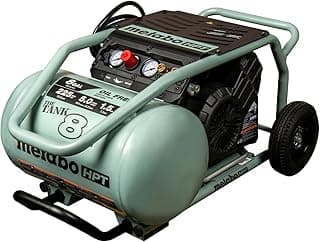
- For casual DIYers who want good performance at a lower cost, look for feature balance and proven reliability in budget picks; an example of a value-oriented pancake style is the Metabo HPT THE TANK EC914S.
- Professionals should invest in higher-capacity, durable compressors with serviceable parts and higher duty cycles.
- Always compare warranty, parts availability, and user reviews to judge long-term value-sometimes paying more upfront saves money on repairs and downtime later. For a wider perspective on options, see our best electric air compressor guide for various builds and capacities.
FAQ
What should I look for when buying the best 110v air compressor?
Focus on the compressor's CFM at the working PSI you need, tank size, duty cycle, and noise level-those determine how well it will run your tools continuously. Portability and whether the pump is oil-free matter for storage and maintenance; oil-free units are easier to care for. If you plan to use nailers or airbrushes, prioritize higher CFM over a huge tank; for inflation or intermittent use, a smaller tank is fine. For a balance of quiet operation, tank capacity, and reliability consider the California Air Tools 8010, which combines an 8‑gallon tank with low noise. Comparing real CFM numbers and user reviews will help match a model to your projects.
Is a quieter compressor worth the extra cost?
Yes, quieter compressors are worth it if you work in a shared garage, early mornings, or close to living spaces because they reduce noise fatigue and neighbor complaints. Quiet models often use specialized pumps or sound-dampening housings, which can cost more up front but improve comfort and allow longer work sessions. If you only need the compressor for occasional tire inflation or short bursts with a brad nailer, a louder, cheaper model can be acceptable. For regular indoor use look for units marketed specifically as "quiet" to avoid surprises.
How long do 110v air compressors typically last and how can I maximize their lifespan?
Life expectancy varies by build quality and usage-many well-made hobby and jobsite 110v compressors last several years with normal use, while heavier-duty units can run much longer. To extend life, drain the tank after each use to prevent corrosion, keep filters clean, and follow the manufacturer's schedule for oil changes on oil-lubricated pumps. Avoid running a compressor past its duty cycle and let it cool between long jobs to prevent overheating. Choosing a proven model from a reputable brand and performing basic maintenance are the best ways to keep it running for years. Our best 10 gallon air compressor article also covers tank care and maintenance tips valuable for longevity.
Do I need a big tank or high PSI for home projects?
Tank size affects how long you can run a tool between motor cycles, while PSI determines whether a tool will operate at its required pressure-most common finish and brad nailers only need moderate PSI and low CFM. For light home tasks and inflating tires, a 1-6 gallon compressor is usually sufficient, but framing and roofing nailers or continuous spray work benefit from larger 6-8+ gallon tanks and higher CFM. PSI ratings above 150 are often overkill for home use unless you have specialty tools. Match the compressor's CFM at the working PSI to the highest-demand tool you plan to use rather than picking solely by tank size. If you want guidance on smaller capacities, see our best 3 gallon air compressor review.
How hard is assembly and routine maintenance on 110v compressors?
Assembly is typically straightforward: mount wheels or handles if included, attach the hose and regulator, and plug it into a standard 110v outlet-most models are ready without complex setup. Routine maintenance depends on pump type; oil-free compressors need minimal upkeep beyond draining the tank and keeping the filter clean, while oil-lubricated pumps require periodic oil changes and belt checks. Always follow the user manual for recommended intervals and safety steps like depressurizing before inspection. Choosing an oil-free model can significantly reduce maintenance time if you prefer low upkeep.
Final Verdict
After testing the top 110V compressors, the strongest units separated themselves by consistent pressure recovery (CFM at working PSI), low noise, oil-free pumps, and rugged build-weak options fell short on one or more of those. Prioritize CFM at 90 PSI, tank capacity, noise level, duty cycle, and overall durability when choosing. The best-performing units combined quiet, oil-free operation with useful tank size and reliable pressure recovery, so they handle finish work and heavier tasks without frequent restarts or excessive noise.
🏆 Best Overall: California Air Tools 8010 1.0HP Ultra Quiet 8-Gallon Compressor
💰 Best Budget: Metabo HPT EC914S Pancake 6-Gallon 200 PSI Compressor
⭐ Best Premium: Metabo HPT EC28M Quiet 1-Gallon Portable Compressor