Buying Guide
Tank capacity and maximum pressure
With a 60 gallon compressor you already have a large reservoir, but not all 60‑gallon units are the same. Check the maximum PSI and how the tank size pairs with the pump’s output-higher PSI gives you more headroom for tools that need bursts of pressure. Also consider whether the unit is single‑stage or two‑stage; two‑stage compressors typically sustain higher pressures and refill the tank more efficiently for heavy use.
- Look for a max PSI that matches the tools you plan to run (e.g., 90-175 PSI range depending on applications).
- Consider a single‑stage 60‑gallon unit for general shop use; choose two‑stage if you run spray guns or industrial tools frequently.
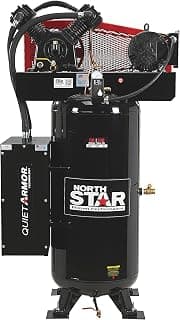
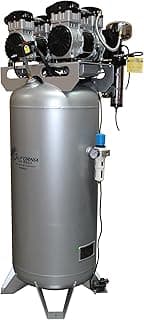
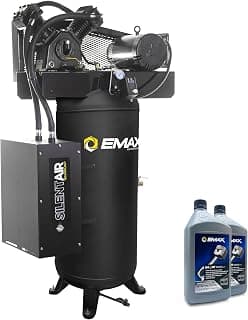
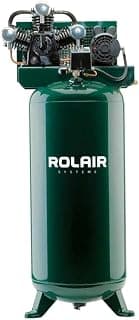
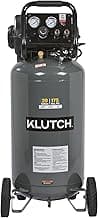
- Example: the Klutch 60‑Gallon Vertical Air Compressor is a common 60‑gal example to compare tank size and rated pressure when shopping.
CFM, duty cycle, and real-world performance
CFM (cubic feet per minute) at a given PSI is the best indicator of how many tools you can run and for how long. Match the compressor’s CFM rating at 90 PSI (or the PSI your tools require) to the combined demand of your air tools. Duty cycle tells you how long the motor can run before needing to cool-higher duty cycles are better for continuous work.
- Prioritize CFM at the PSI you'll use most often rather than just peak CFM numbers.
- For extended shop use, choose compressors with higher duty cycles or larger motors to avoid frequent cool‑downs.
Motor power, voltage and installation needs
Most 60‑gallon compressors arrive with a more powerful motor-often requiring 230V service and more amperage than common 120V tools. Confirm your electrical supply and whether a dedicated circuit or professional wiring is needed. Also check whether the unit is single‑phase or three‑phase if you’re installing in a commercial setting.
- Verify voltage and amperage requirements before purchase to avoid costly electrical upgrades.
- Consider the motor horsepower (HP) as it influences refill speed and sustained CFM.
Noise, durability and maintenance
Noise level and construction affect comfort and long‑term ownership. Oil‑lubricated pumps typically run cooler and last longer under heavy use but require periodic oil changes. Oil‑free pumps need less maintenance but may not last as long under continuous, demanding workloads. Noise ratings (dBA) matter if the compressor sits near a workspace or residential area.
- Choose oil‑lubricated pumps for heavy professional use; oil‑free for lighter or intermittent use where low maintenance is a priority.
- Look for steel tanks, quality pump components, and easy access to service parts to extend lifespan.
- Check manufacturer recommendations for maintenance intervals and available replacement parts.
Portability, footprint and value for money
Although 60‑gallon compressors are large, designs vary: vertical tanks save floor space but may require more ceiling clearance; horizontal tanks are lower but take up more floor area. Consider where the unit will live, how you’ll move it for service, and which accessories (regulators, filters, hose reels) are included or available. Balance initial price against expected lifespan, warranty, and operating costs.
- Match the compressor’s footprint to your workshop layout and clearance constraints.
- Compare warranties and accessory packages to gauge long‑term value.
- If you need a versatile 60‑gal option for mixed shop use, evaluate units with robust pumps, decent CFM at working PSI, and a solid parts/support network. For more ideas on capacity options, see our best 30 gallon air compressor guide.
FAQ
What's the best 60 gallon air compressor for a home garage?
For a home garage you want a 60-gallon unit with a reliable pump, decent CFM at 90 PSI, and a manageable footprint for your space. A vertical single-stage compressor is common for garages because it saves floor space while providing long run times between cycles. If you need a specific example that balances cost and capacity, consider the Klutch 60-Gallon Vertical Compressor. Position it on a flat, ventilated surface and match outlet size and electrical requirements to your shop tools. Regular maintenance will keep it running efficiently for years.
How much CFM and PSI should a 60 gallon compressor deliver for common shop tools?
Match the compressor's CFM at 90 PSI to the highest-demand tool you plan to run; paint guns and pneumatic sanders often need 8-12 CFM, while impact wrenches and nailers usually require less. The tank size (60 gallons) helps sustain airflow during tool use, but the pump's continuous CFM rating determines performance under load. Check each tool's CFM and add a safety margin of 20-30% to avoid frequent short cycling. Also consider the compressor's duty cycle-higher duty cycles handle longer, repeated use without overheating. If seeking compressors with different specifications, our best 200 psi air compressor guide can provide additional insights.
Are expensive 60-gallon compressors worth the extra cost?
Higher-priced compressors often offer better build quality, larger pumps, longer duty cycles, and improved cooling systems that extend lifespan and reliability. If you run heavy tools frequently or need consistent output for professional work, investing in a premium model can reduce downtime and maintenance costs. For occasional use or light DIY tasks, a mid-range unit usually provides acceptable performance at a lower upfront cost. Evaluate warranty terms and available service support when comparing price tiers.
How long do 60-gallon air compressors last and what affects their lifespan?
With proper care, a well-built 60-gallon compressor can last a decade or more, but actual lifespan depends on usage intensity, maintenance, and whether the pump is oil-lubricated. Regular tasks that extend life include draining the tank daily to remove moisture, changing pump oil per manufacturer guidance, and keeping intake filters clean. Harsh environments, continuous heavy-duty cycles, and neglected maintenance will shorten service life. Choosing a model with replaceable parts and good support can also make long-term ownership easier.
Is assembly and installation difficult for a 60-gallon vertical compressor?
Basic assembly usually involves attaching wheels or mounting feet and connecting the pressure switch and outlet fittings, which most DIYers can handle with common tools. Installation can be more complex if the unit requires a dedicated 230V/240V circuit-hire a licensed electrician for hardwired or high-voltage hookups. Place the compressor on a level surface with adequate ventilation and clearances, and follow the manufacturer's break-in and safety procedures before heavy use. Proper initial setup reduces vibration, noise, and premature wear. For more information on setup and power needs, see our best 120v air compressor resource.
Final Verdict
The strongest compressors separated themselves by delivering steady CFM under load, durable pump and motor construction, and tank capacity that minimizes short-cycling. Weaker options cut corners with smaller tanks, lower continuous flow, or harder-to-service components. Prioritize CFM at 90 PSI, tank size and duty cycle, motor horsepower and voltage, noise level, and serviceability. Top performers share solid build quality, consistent air delivery for extended tasks, and straightforward maintenance that preserves long-term value.
🏆 Best Overall: DEWALT DCC020IB 20V MAX Tire Inflator with Auto Shutoff
💰 Best Budget: ETENWOLF VORTEX S6 Cordless Inflator with 19200mAh Battery
⭐ Best Premium: Makita MAC2400 Big Bore 2.5 HP Air Compressor