Buying Guide
Choosing the best air compressor for automotive painting means matching the compressor’s airflow, pressure stability, and reliability to the demands of your spray gun and workflow. Below are the key factors to weigh when shopping-each section explains what to look for and gives practical examples to help you narrow choices.
Airflow and Operating Pressure
The most important compatibility check is whether the compressor can maintain the spray gun’s required airflow (CFM) at its working pressure (PSI). Rather than focusing on headline tank size alone, look for how the compressor performs under load and whether it can sustain the flow your gun demands while you work.
- Confirm the spray gun’s required CFM and PSI from its manual, and choose a compressor that reliably meets that requirement under continuous use.
- If you plan to use multiple guns or larger siphon/gravity-feed setups, pick a unit with higher sustained output or a larger tank to avoid pressure drops.
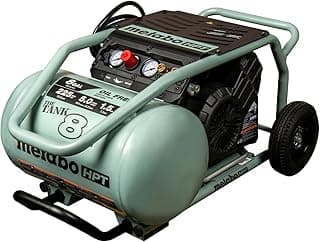
- For shop-grade performance, consider compressors designed for heavy spray work-examples include larger, professional models such as the Metabo HPT THE TANK, which are built with higher capacity and stable delivery in mind.
Tank Size and Duty Cycle
Tank capacity affects how long you can spray before the motor cycles to refill the tank; duty cycle indicates how long the compressor can run before it needs rest. For whole-panel or full-vehicle painting you’ll want a compressor with a tank and duty rating suited to extended runs.
- Think about session length: frequent, long bursts require a larger tank or a compressor designed for continuous use to reduce cycling and pressure fluctuation.
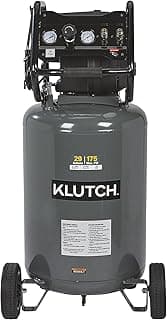
- If you need sustained capacity for multi-gun setups or production work, shop for larger tanks such as the long-lasting options like the Klutch 29-Gallon Air Compressor.
- For occasional spot repairs or small panels, a smaller tank may be sufficient and easier to store.
Motor Type, Maintenance, and Reliability
Decide between oil-free and oil-lubricated compressors based on maintenance tolerance and expected longevity. Oil-free models are low-maintenance and ideal for portability and clean air, while oil-lubricated units often run cooler and can last longer in heavy-duty shop environments.
- Consider how much routine maintenance you’re willing to do-oil changes and periodic service are typical for lubricated compressors but not for oil-free units.
- Look for robust components (cast-iron pumps, quality valves) and reputable warranties for long-term reliability; value-oriented, high-quality options like the Makita MAC700 are often a good balance of durability and cost.
- Check parts availability and serviceability for the brand you choose-readily available filters, belts, and replacement parts simplify upkeep.
Air Quality, Filtration, and Accessories
Contaminants and moisture in compressed air will ruin a paint finish. Prioritize compressors and accessory setups that support clean, dry air and provide fine control for finishing work.
- Plan for at least one quality inline filter/regulator and a moisture trap; for critical finishes you may want additional filtration or an external dryer.
- Match fittings and hoses to your spray gun to minimize pressure loss-high-quality hose diameter and short runs help preserve airflow to the gun.
- For small-detail automotive work or hobby painting, compact integrated systems such as the Master Airbrush Cool Runner II provide convenient filtration and airflow suited to airbrush-style tasks. Consider exploring best airbrush compressors for more options tailored to delicate applications.
Portability, Noise, and Workspace Fit
Where and how you paint determines whether portability or quiet operation matters more. A garage or small shop may need a compact, lower-noise unit; a fixed shop compressor can be larger and run remotely to reduce noise at the work area.
- Consider the compressor’s footprint and weight if you need to move it between jobs or store it when not in use. For setups suited to smaller areas or easy transport, see the best air compressor for home garage picks.
- Noise level can be a major comfort and safety consideration-look for quieter designs or plan to place louder models in a separate room or outside with long, appropriately sized hose runs.
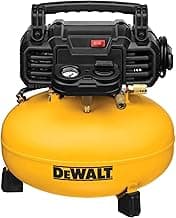
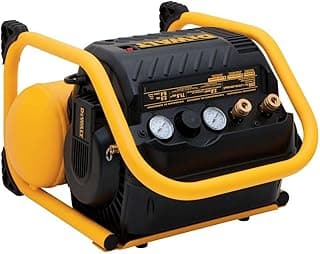
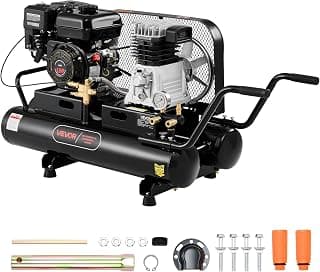
- Pancake and portable designs like the DEWALT Pancake Air Compressor are easier to move and store, while vertical or wheelbarrow-style units offer more capacity at the cost of portability.
FAQ
What size air compressor do I need for automotive painting?
Match the compressor to your spray gun’s continuous air demand rather than just peak numbers-look for a unit that consistently delivers the required CFM at the gun’s working PSI. Tank size matters because a larger tank holds pressure longer and smooths out pulsing, which helps produce an even finish. Also consider duty cycle: compressors with higher duty cycles run longer without overheating, which matters for extended panels or multiple coats. If you plan to spray frequently or work on whole cars, prioritize a heavier-duty, tank-equipped model over a small portable unit.
Oil-free vs oil-lubed compressor for automotive painting-which should I buy?
Oil-lubed compressors generally handle continuous, heavy use better and tend to run cooler and last longer with proper maintenance, making them a common choice for shop painting. Oil-free models are lower maintenance and lighter, which can work for occasional or mobile jobs but may have a shorter lifespan under constant duty. Regardless of type, you must control moisture and oil carryover with proper filtration, traps, or dryers to protect paint quality. For consistent, professional finishes choose a unit that pairs with a good filter/regulator setup.
Are expensive air compressors worth it for automotive painting?
Higher-priced compressors usually offer a better duty cycle, steadier CFM, larger tanks, and more robust components that reduce downtime and give smoother finishes over time. If you paint regularly or run production work, investing in a professional-grade unit can save money by avoiding interruptions and frequent repairs; a good example is the Metabo HPT THE TANK, which is built for heavier shop use. For hobbyists or occasional touch-ups, a mid-range compressor will often provide acceptable results without the higher upfront cost. Weigh expected frequency, required finish quality, and long-term reliability when deciding how much to spend.
What features matter most when choosing the best air compressor for automotive painting?
Prioritize steady CFM at the working PSI of your spray gun, a sufficiently large tank to minimize pump cycling, and a high duty cycle for longer run times. Look for good moisture control options-built-in or add-on filters, regulators, and air dryers-to prevent contamination of your finish. Noise level, portability (if you move the compressor between jobs), and compatible fittings are practical considerations, as are warranty and serviceability. A reliable gauge and adjustable regulator help you fine-tune pressure for different coatings and guns.
How do I maintain an air compressor to make it last for automotive painting?
Drain the tank after each use to remove accumulated water and prevent corrosion, and clean or replace intake and inline filters regularly to keep air dry and clean. For oil-lubed models, change the oil and inspect seals per the manufacturer’s schedule; check belts, hoses, and fittings for wear and leaks. Use a moisture trap or desiccant dryer when running spray guns, and follow the service intervals in the owner’s manual for valve and pump inspections. Regular basic maintenance prevents contamination of paint jobs and extends compressor life.
Final Verdict
After testing the field, the strongest compressors stood out for steady, controllable airflow at painting pressures, accurate regulators, and low‑moisture delivery-features that directly affect finish quality. Buyers should prioritize rated CFM at the PSI you paint at, reliable pressure control, appropriate tank size or duty cycle for continuous spray, moisture management (filters/drains), and durable build with service support. The top performers shared consistent pressure delivery, robust regulators, and construction that holds performance steady during extended automotive paint work.
🏆 Best Overall: DEWALT DCC020IB 20V MAX Portable Tire Inflator with Auto Shutoff
💰 Best Budget: ALL-TOP 12V Air Compressor with LCD Preset Pressure Control
⭐ Best Premium: Pcp 4500Psi 30Mpa Compressor (12V DC / 110V AC)