Buying Guide
Quick note
When hunting for the best air compressor for construction, focus first on what tools you’ll run on it and how you’ll move it around the jobsite. The right balance of power, capacity, portability and durability determines whether a compressor is genuinely useful day-to-day.
Power, CFM and duty cycle
CFM (cubic feet per minute) at a given PSI and the compressor’s duty cycle tell you what tools it can run and for how long. Nailers and brad guns draw relatively little CFM, while framing nailers, sanders and impact wrenches need far more sustained airflow.
- Look for rated CFM at 90 PSI-this is the practical spec most tool makers reference.
- Duty cycle (expressed as a percentage) shows how long the pump can run before needing to cool; higher duty cycles are critical for heavy framing or repetitive finish work.
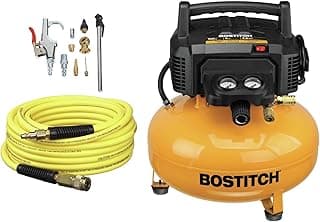
- If you want an accessible example that balances pressure and jobsite use, consider a pancake-style unit like the DEWALT Pancake Air Compressor, which offers useful PSI and CFM for many common construction tasks.
Tank size and portability
Tank capacity affects how long you can run tools between motor cycles; larger tanks store more compressed air for bursts of high-demand work. But on construction sites you’ll also value portability-weight, footprint and carry features matter. For more options focused on mobility, see our guide to the best jobsite air compressor.
- Small tanks (1-3 gallons) are excellent for trim work and brad nailers because they’re lightweight and quick to move.
- Mid-size tanks (6 gallons and up) smooth out airflow for framing and finish applications without constant motor cycling.
- For cordless or ultra-portable needs, battery-powered inflators like the Milwaukee M18 Inflator are handy for remote tasks and tire/ball inflation, though they won’t replace larger compressors for sustained tool use.
Noise, jobsite comfort and vibration
Noise level affects crew fatigue and communication on busy jobs. If you work in residential neighborhoods or need to run tools indoors, quieter compressors and vibration-minimizing mounts make a real difference. For lower noise options suited for smaller spaces, check out the best air compressor for home use category which often features quieter models.
- Look for “quiet” or “quiet series” models if noise is a concern-these often use sound-dampening housings and slower pumps to reduce dB levels.
- Rubber feet and balanced frames reduce vibration and movement during use, improving stability for finish work.
- Remember that quieter units can trade off raw power-match your noise preference to the demands of the tools you’ll use.
Durability, maintenance and oil vs. oil-free pumps
Construction compressors live in dusty, rough environments. Build quality, protective shrouds and serviceability determine long-term reliability. For a thorough comparison on durability suited for various uses, see the reviews on the best air compressor for shop which often features rugged, high-quality builds.
- Oil-lubricated pumps typically run cooler and last longer under heavy continuous use, but they require more maintenance.
- Oil-free pumps are lower maintenance and fine for intermittent or light-to-moderate jobsite use, making them a common choice for trim and finish contractors.
- Check tank coatings, regulatory safety valves and replacement-part availability-rugged construction and easy serviceability save money over time.
Features and overall value
Evaluate features that improve usability: quick-connect couplers, pressure regulators with easy-read gauges, automatic shutoff, LED lights for low-light work and on-board tool storage. Balance feature set against price and the expected lifespan of the compressor for the best value.
- Automatic shutoff and accurate regulators protect tools and reduce run time.
- Wheels, carrying handles and compact footprints increase on-site mobility and storage options.
- Prioritize the specifications that match your trade-finish carpenters will favor portability and low noise; framers and roofers will prioritize CFM, PSI and duty cycle for sustained performance. Learn more about options tailored to heavy framing from our best air compressor for framing guide.
FAQ
What features matter most when choosing the best air compressor for construction?
When shopping for the best air compressor for construction, prioritize CFM at your tool's working PSI, tank size, and the unit's duty cycle so it can handle sustained use. Portability-weight, handles and wheels-and the power source (cordless, electric, or gas) determine how easy it is to move around a site. Also consider noise level, quick-connect fittings for fast tool changes, and oil-free pumps if you want lower maintenance. Durability and serviceability (easy access to parts and a good warranty) are crucial for heavy job-site use. For an example of a versatile on-site option, check the Milwaukee M18 Inflator.
Do I need a big tank or high PSI for construction tasks?
Tank size and PSI serve different roles: tank capacity smooths out demand and reduces motor starts, while PSI and CFM determine whether a tool runs correctly. Many framing and finish nailers require short bursts of air and benefit more from adequate CFM than a massive tank. If you run continuous tools like grinders or sanders you’ll want higher continuous CFM and a larger tank for steady pressure. A compact 6-gallon pancake with a higher pressure rating is a practical middle ground for many trades; see options like the DEWALT 6-Gallon Pancake.
Are expensive air compressors worth it for construction work?
Higher-priced compressors often buy you better build quality, higher duty cycles, and longer warranties-features that pay off on busy sites. However, if your work is occasional or limited to small nailers, a midrange unit can deliver excellent value. Match features to your needs-look at CFM, duty cycle, portability, and serviceability rather than price alone. Spending more makes sense when you need continuous power, low downtime, and easier maintenance access.
How long do construction air compressors typically last and what affects lifespan?
A well-maintained compressor on a construction site can last many years, but actual lifespan ranges widely based on use and care. Oil-lubricated pumps usually last longer than oil-free ones under heavy duty, but they need scheduled oil changes and more maintenance. Frequent drainage of condensate, regular filter and belt checks, and avoiding corrosion-prone storage conditions extend life. Buying from reputable brands and following the manufacturer’s service schedule is the best way to maximize longevity.
How hard is assembly and routine maintenance on a job-site air compressor?
Most job-site compressors require minimal assembly-attach fittings, connect hoses, and confirm electrical or fuel connections per the manual. Daily tasks are simple: drain the tank of water, check pressure relief valves, and inspect hoses and fittings for leaks. For oil-lubed models you'll add oil changes and belt tension checks at the intervals the manufacturer recommends. Keep a small toolbox, spare fittings and a maintenance log on site to reduce downtime and keep the compressor running reliably.
Final Verdict
After testing the top construction compressors, the winners stood out for consistent output under load, durable construction, and jobsite-friendly ergonomics-while weaker options fell short on airflow, portability, or long-term reliability. Prioritize CFM/PSI that match your nailers or impact tools, tank size and refill speed, power source (battery vs. corded), noise level, and serviceability. The best performers all combined steady delivery with rugged frames, easy quick-connects, and low-maintenance, oil-free operation to keep projects moving.
🏆 Best Overall: Milwaukee M18 Inflator 2848-20 Battery Inflator
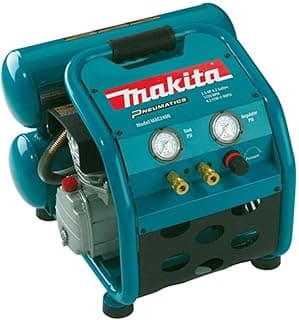
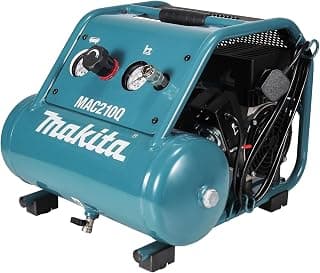
💰 Best Budget: Makita MAC210Q Quiet 2-Gallon Oil-Free Compressor
⭐ Best Premium: Makita MAC700 Big Bore 2.0 HP Air Compressor