Buying Guide
Air delivery (CFM) and pressure (PSI)
For framing work the two most important performance numbers are how much air the compressor can deliver (CFM) at the pressure you need (PSI). Framing nailers require short bursts of high-volume air, so prioritize a compressor that can sustain the tool’s rated CFM at the required PSI without long lag times.
- Match the compressor’s rated CFM/PSI to your most demanding nailer rather than smaller finish tools.
- If you frequently run multiple nailers or use a collated roofing gun, choose a unit with higher sustained output and faster recovery.
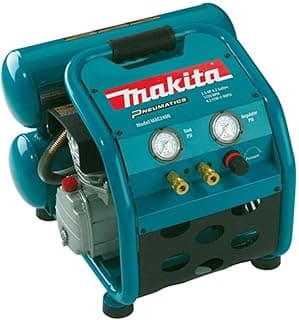
- For an example of a tool-oriented design popular with framers, consider the Makita MAC2400, which is commonly recommended as a higher-output option.
Tank size and recovery time
Tank capacity determines how long you can run between motor cycles; recovery time determines how fast the compressor refills the tank. For framing, a moderate-to-large tank shortens motor cycling and gives more consistent driving power during rapid nailing.
- Look for a balance: larger tanks provide buffer for bursts, but make the unit heavier and bulkier.
- Consider how often you’ll be moving between jobs. A 6-gallon pancake-style tank is a common compromise for framing crews who need decent reserve without excessive weight.
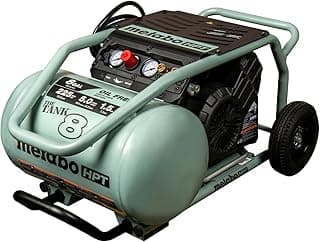
- If you want a budget-friendly pancake option, the Metabo HPT THE TANK (EC914S) is a popular example of a portable 6-gallon compressor used for framing tasks.
Portability and weight
Framing typically happens on ladders, roofs and mixed jobsite terrain. Portability affects how easy the compressor is to move, lift into a truck, and carry around the site. Consider handles, wheels, overall weight and footprint when evaluating models.
- Smaller, lighter compressors are easier to carry but may trade off tank size and output.
- Wheel-and-handle designs help when you need to roll the unit across a flat surface but expect to carry it up stairs or into tight spaces.
- For framers who prioritize compact portability and quiet operation, the Metabo HPT EC28M is an example of a very compact, lightweight option.
Noise level and jobsite friendliness
Noise matters for comfort, communication and jobsite regulations. Quieter compressors reduce hearing strain and make it easier to hear co-workers or power tools. If you work in residential neighborhoods or enclosed spaces, select a low-sound unit.
- Look for models described as "quiet" or "quiet series" if minimizing noise is a priority.
- Consider using hearing protection regardless of compressor noise-constructions sites can be loud from multiple sources.
- The Makita MAC210Q is an example of a quiet-series compressor often chosen for jobsite comfort.
Durability, maintenance, and serviceability
Jobsite compressors endure dust, drops and heavy daily use. Check for rugged construction, serviceable parts, and clear maintenance requirements. Oil-free pumps reduce routine maintenance, while oil-lubed models can offer longer service life if maintained properly.
- Prefer compressors with accessible valves and straightforward filter/drain access.
- Confirm availability of replacement parts and local service if you plan heavy use.
- Read owner feedback about long-term reliability for the models you’re considering and factor warranty into your decision.
Value and warranty
Price is important, but the best value balances performance, durability and after-sale support. Compare included features, warranty length and real-world owner reviews rather than choosing solely on upfront cost.
- Calculate expected service life and downtime risk-sometimes a slightly more expensive, more durable compressor is cheaper over its lifetime.
- Look for warranties that cover motor and pump components; check what routine maintenance you must perform to keep the warranty valid.
- Use reviews and comparison tests to confirm a model’s real-world value for framing work rather than relying only on specs.
For more on choosing the right unit, see our detailed best air compressor for construction guide which covers models suited to heavy jobsite use.
FAQ
What size air compressor do I need for framing nailers?
Match the compressor to your framing nailer by checking the tool’s required PSI and CFM and choosing a unit that meets or exceeds those ratings. For framing you generally want a model with enough airflow and tank capacity to avoid the pump running constantly during long strips of nails. Prioritize steady output and quick recovery so drive depth stays consistent from the first to last shot. If you work on jobsites, also consider portability and how easy the unit is to move between locations.
Is a pancake compressor good for framing work?
Pancake compressors are compact and easy to carry, which makes them good for finish or trim work and light-duty tasks. For heavy framing that requires long continuous firing, pancakes can struggle with recovery because of their smaller tanks and lower sustained airflow. They can still work on short runs or when paired with a high-capacity hose and efficient fittings, but many pros prefer larger or twin-cylinder compressors for full-day framing. Consider the typical length of your nail runs before choosing a pancake model.
How important are CFM and PSI for framing nailers?
Both matter: PSI controls the drive depth of the nail while CFM determines how long the compressor can supply enough air under load. If PSI drops under use you’ll see inconsistent driving; if CFM is too low the pump will cycle constantly and recovery will be slow. Always size the compressor to cover the nailer’s peak demand plus a margin for leaks or multiple tools. Also check hose size and fittings-undersized hoses can reduce effective airflow at the tool.
Which air compressor is most reliable on the jobsite?
Look for compressors with robust metal tanks, serviceable pumps, and a reputation for sturdy construction and replaceable parts. Oil-lubricated pumps and larger bore cylinders are often favored for durability on heavy jobsite use because they run cooler and last longer with proper care. A solid example that trades quiet operation for proven durability is the Makita MAC2400, which many contractors choose for day-in, day-out framing. Whichever model you pick, prioritize ease of service and availability of replacement parts.
How do I maintain an air compressor for framing to make it last?
Basic maintenance-draining the tank after use, checking hoses and fittings, and keeping the intake filter clean-goes a long way toward longevity. Follow the owner’s manual for oil changes or belt checks if your model requires them; oil-free compressors reduce that maintenance burden. If low noise and low upkeep matter on your site, consider quieter oil-free models like the Makita MAC210Q. Store the compressor dry, inspect safety valves periodically, and address unusual noises or oil leaks promptly to avoid bigger repairs.
Final Verdict
The top framing compressors separated themselves by reliable pressure delivery, tank capacity and recovery speed combined with durable build and low noise for long jobsite days. Weaker options cut corners on tank size, recovery or construction. Prioritize CFM at framing pressures, tank volume, recovery time, portability and serviceability-these determine how long you can run a framing nailer without bogging down. The best performers pair solid construction with steady pressure and practical portability for sustained framing work.
For professionals looking for top picks that balance power and portability, check out our best portable air compressor for construction resource for recommendations especially suited to active jobsite use.
🏆 Best Overall: Makita MAC210Q Quiet Series 1 HP 2-Gallon Oil-Free Compressor
💰 Best Budget: Metabo HPT THE TANK EC914S 6-Gallon Pancake Compressor
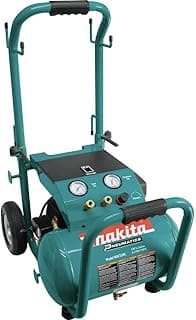
⭐ Best Premium: Makita MAC5200 Big Bore 3.0 HP Compressor