Buying Guide
Tank size and usable capacity
For a home garage, tank size determines how long you can run air tools before the motor has to top up. Smaller tanks refill quickly and are fine for inflating tires and running brad nailers; larger tanks smooth out pressure for intermittent high-demand tools like impact wrenches. Look past the headline "gallon" number and consider how often you’ll be running continuous tools.
- Tip: A 6‑gallon pancake tank is a common sweet spot for DIYers - compact but useful for most garage jobs. A typical example is the DEWALT 6‑Gallon Pancake Air Compressor.
- For long, continuous use (spray painting, heavy shop tools), favor larger tanks or stationary compressors to avoid frequent motor cycling.
Pressure (PSI) and airflow (CFM)
PSI tells you the maximum pressure the compressor can deliver; CFM (cubic feet per minute) describes how much air it supplies. Match both to the tools you plan to use. Nailers, inflators and airbrushes need low CFM, while grinders and impact wrenches require higher CFM at working PSI.
- Check tool requirements: add a safety margin to both PSI and CFM so the compressor isn’t running at its limit.
- If a product lists PSI but not CFM, look for user reviews or manufacturer specs to confirm it can sustain your tools.
Portability and power options
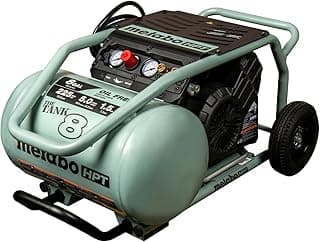
Decide whether the compressor will live on a bench or move around the driveway. Wheeled, larger compressors offer capacity but sacrifice portability; pancake and pancake‑style tanks are compact and easy to store. Also consider power source: corded electric units are common for garages, while battery or 12V options give roadside convenience.
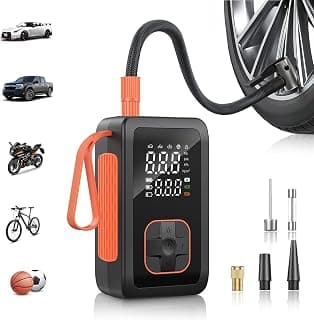
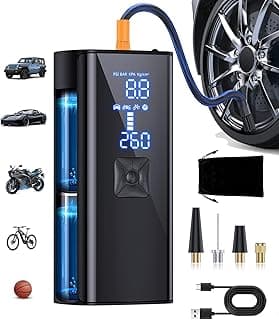
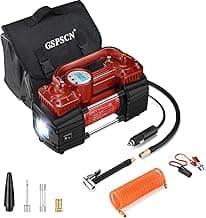
- If you want a pocketable inflator for roadside emergencies, compact electric pumps are a practical choice - for example, the ZSX 160 PSI Portable Tire Inflator illustrates the small, transportable end of the spectrum.
- For mobile work across a property, prioritize units with built‑in handles, low weight, or wheels.
Noise, duty cycle and durability
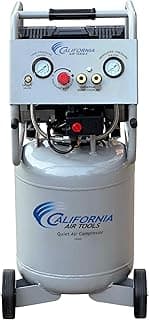
Noise matters in a home garage-look for quieter models or those with insulated motors if you work often. Duty cycle indicates how long the compressor can run before needing a cool‑down; a higher duty cycle is important for frequent or longer tasks. Also assess build quality: metal tanks, solid fittings, and reputable motor assemblies last longer under regular use. For those interested in quieter models, see our guide on the best quiet air compressor for home garage.
- Tip: If you plan to spray or run tools for extended periods, choose a compressor with a higher duty cycle and robust cooling features.
- Inspect valves and quick‑connects for corrosion resistance and ease of replacement; these are common wear points.
Accessories, fittings and ease of use
Accessories can make a basic compressor far more useful. Useful extras include hoses, inflation needles, blow guns, and a reliable pressure regulator or gauge. Some compressors bundle kits that save money and ensure compatibility. For people using specific tools, check the best air compressor for air tools to match accessories and fittings properly.
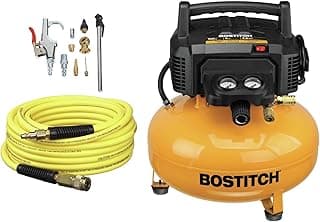
- Example: If you want a ready‑to‑use package, consider a compressor that includes a full accessory kit such as the Bostitch 6‑Gallon Pancake Compressor Kit, which ships with common inflation and blow tools.
- Look for easy‑to‑read gauges, user‑friendly regulators, and quick‑connect couplers to speed set‑up and change tools safely.
Value for money and intended use
Finally, balance upfront cost with how you’ll use the compressor over time. A budget inflator can be perfect for occasional tire inflation, while a higher‑end model with better duty cycle, build quality and warranty is a smarter purchase for frequent garage work. Match the compressor to your projects rather than buying the most powerful unit by default. For more on choosing models based on usage, see our overview of the best air compressor for home use.
- Ask: Will this be for occasional home tasks, or regular, heavier duty shop work? Choose capacity and features accordingly.
- Consider warranties and availability of replacement parts-these affect long‑term ownership cost and satisfaction.
FAQ
What is the best air compressor for a home garage?
For most DIYers a portable pancake-style compressor hits the sweet spot between power and footprint - you get enough tank capacity for nail guns and blow-off tasks without a big stationary unit. For an all-around reliable option, consider the DEWALT Pancake Air Compressor, which pairs a compact 6‑gallon tank with high PSI for quick recovery. If you plan to run heavier air tools regularly, look for higher CFM ratings and a larger tank. Always match the compressor’s CFM at the tool’s required PSI to ensure steady performance.
What size compressor do I need for common garage tools like nailers and impact wrenches?
Tank size affects how long you can run without the motor filling the tank, but the key number is CFM at the tool’s operating PSI - that determines whether the compressor can keep up. Small pneumatic tools like brad or finish nailers usually work fine with a 1-6 gallon pancake compressor, while impact wrenches and spray guns need higher CFM and a larger tank. Check each tool’s CFM/PSI requirement and pick a compressor whose CFM meets or exceeds that rating at the same PSI. If you plan to run multiple tools or continuous-duty jobs, choose a compressor with a bigger motor and tank to avoid frequent cut-ins.
Are pancake compressors good for home use?
Yes - pancake compressors are compact, stable, and fast to refill, making them ideal for home garages where space and portability matter. They’re great for inflation, stapling, and trim work, and some kits like the Bostitch 6‑Gallon Pancake Compressor Kit include useful accessories so you can start right away. The trade-off is a smaller tank and lower sustained CFM compared with larger upright or belt-drive compressors. For occasional heavy-duty work you’ll want a larger tank or a compressor rated for continuous use.
How often should I maintain my garage air compressor and what maintenance is required?
Routine maintenance keeps a compressor safe and extends its life: drain the tank after each use to remove moisture, inspect hoses and fittings for leaks, and clean or replace the air filter as needed. If your compressor is oil-lubricated, follow the manufacturer’s schedule for oil checks and changes; oil-free models still need regular cleaning and inspections. Also test the safety relief valve occasionally and tighten connections when you spot leaks. Always follow the specific maintenance schedule in your compressor’s manual for best results.
Can a portable tire inflator replace a full air compressor for garage tasks?
Portable tire inflators are excellent for tires, sports gear, and quick small inflations, but they usually lack the continuous CFM and duty cycle needed for air tools and extended spraying jobs. If your garage work is mostly tire inflation and occasional inflatables, a compact inflator like the ZSX Portable Tire Inflator is convenient and budget-friendly. For regular air-tool use, choose a compressor sized for the tools’ CFM and duty cycle to avoid overheating and slow refill times. Think of inflators as a handy complement, not a full replacement, for workshop-grade compressors.
Final Verdict
After testing the top picks, the strongest air compressors stood out for practical power and durability: consistent pressure delivery, solid build quality, and useful features (tank size, clear gauges, and accessory compatibility) separated them from weaker options. Buyers should prioritize tank capacity, max PSI, portability, noise and included fittings for garage tasks. The best-performing models combine dependable pressure, rugged construction, and straightforward controls that make regular garage use faster and less frustrating. For those needing more power, also consider our summary of the best air compressor for shop.
🏆 Best Overall: DEWALT Pancake Air Compressor, 6 Gallon, 165 PSI (DWFP55126)
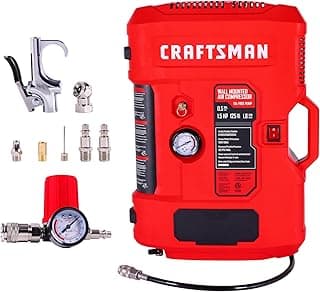
⭐ Best Premium: CRAFTSMAN Air Compressor, 2 Gallon Portable Air Compressor 1/3HP Max 125 PSI Oil-Free Light Weight with 10 PCS Accessory Kit