Buying Guide
Tank size and maximum pressure (PSI)
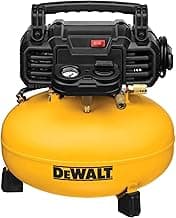
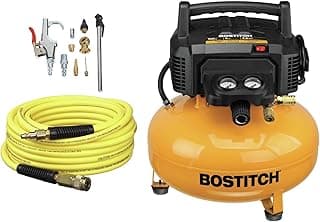
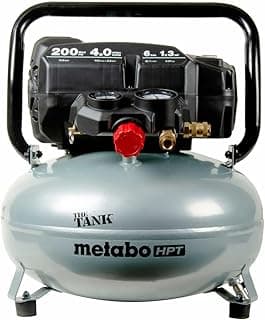
Tank capacity and PSI determine how long an air tool runs before the compressor needs to cycle. For typical home tasks - inflating tires, running brad nailers and finishing tools - a 4-6 gallon pancake tank with 120-165 PSI max is a sweet spot because it delivers short bursts of air without being bulky.
- Smaller tanks (1-3 gallons) are fine for inflating tires and inflatables but refill quickly under continuous use.
- Six-gallon tanks are versatile for workshop and garage tasks; a 200+ PSI compressor is useful if you plan to run heavier framing or roofing nailers.
- Example: the PORTER-CABLE 6‑Gallon Pancake Compressor is a common home‑use configuration that balances capacity, portability and price.
CFM (air delivery) and duty cycle
CFM (cubic feet per minute) at a given PSI tells you how much air the compressor can deliver. Match the rated CFM at the PSI you’ll use to the tool’s requirement. Duty cycle indicates how long the pump can run before needing to rest - important for finish work or extended use.
- For inflating and light nailers, 2-3 CFM at 90 PSI is usually enough. Heavy pneumatic tools require higher CFM.
- Battery and portable compressors can offer high duty cycles for quick jobs; if you need continuous operation, prioritize models advertised with longer or 100% duty cycles.
- Example: the ETENWOLF VORTEX S6 highlights a 100% duty cycle design, which is useful if you expect extended inflation or frequent tool cycles without cooldown periods.
Power source and portability
Decide whether you need a plug‑in electric compressor, a cordless/battery model or a larger stationary unit. Home users often benefit from a mix: a portable cordless inflator for roadside emergencies and a small electric compressor for shop tasks. You can find detailed guidance on models suited for task variety in our best air compressor for home garage review.
- Cordless models are extremely handy for tires and inflatables; they’re compact and easy to store.
- Plug‑in electric compressors provide steadier power for most workshop tools and usually offer higher CFM for the price.
- Consider weight, handle design and footprint if you’ll move the compressor around the garage or store it in a small space.
Noise, maintenance and durability
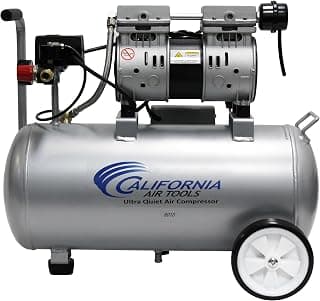
Noise matters if you work in shared spaces or early/late hours. Oil‑free pumps reduce maintenance but can be louder; oil‑lubed compressors tend to run quieter and last longer under heavy use if properly maintained.
- Look for published decibel ratings when noise is a priority - some home models advertise lower dB specifically for indoor or workshop use. Check our insights on the best quiet air compressor for home garage for noise-focused options.
- Regular tank draining, checking fittings and following the manufacturer’s service schedule greatly extends life and performance.
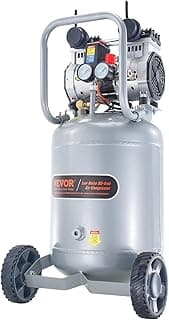
- Example: the Quiet 5‑Gallon Air Compressor lists a low noise level (68 dB) and an oil‑free design, which is convenient for hobby shops and garages where noise control and minimal maintenance are priorities.
Controls, accessories and overall value
Controls and included accessories affect usability out of the box. A built‑in regulator, clear pressure gauges, quick‑connect fittings and an inflation kit make a compressor more versatile and save you from buying extras.
- Check for an included hose, inflator tips and quick‑connect plugs - these boost immediate usefulness and value.
- Simple, well‑marked controls and a reliable pressure regulator make set‑up and repeatable work easier.
- Balance upfront cost against expected use: a slightly higher‑priced quiet or higher‑CFM unit can be better long term if you’ll rely on it regularly.
FAQ
What is the best air compressor for home use?
For most homeowners, a portable, low-maintenance compressor that covers tires, inflatables and light shop work is ideal. Our top pick is the DEWALT Tire Inflator Portable Air Compressor because its portability, automatic shutoff and built-in light make quick jobs easier. If you plan to run larger pneumatic tools or need longer continuous output, look at a 6‑gallon pancake model like the Porter‑Cable. Match the compressor’s tank and CFM to the tools you’ll use rather than buying the biggest unit you can find.
Should I choose an oil-free or oil-lubricated air compressor for home use?
Oil-free compressors are typically the better choice for home users because they require less maintenance and are ready to use after storage. Oil-lubricated models run cooler and can be more durable under heavy, continuous loads, so they make sense if you’ll use the compressor for daily, professional work. For occasional DIY tasks, an oil-free pancake or portable unit keeps ownership simple. Check the manual for any model-specific maintenance steps regardless of type.
Are expensive air compressors worth it for DIY and home projects?
Higher-priced compressors usually offer better build quality, quieter operation, higher PSI/CFM ratings and longer duty cycles, which matter if you use them frequently. For occasional DIY tasks you can save money on a budget pancake or portable inflator and still get reliable performance. If you plan to run framing nailers, paint sprayers or multiple tools, investing in a premium or professional model can pay off in speed and durability. Consider how often and what tools you’ll run before spending extra. Further insights are available in our best air compressor for construction guide.
What features matter most when buying an air compressor for home use?
The most important factors are CFM at the PSI your tools need, tank size (for how long you can run tools), duty cycle and noise level. Portability, quick‑connect fittings and whether the pump is oil‑free also affect usability for home projects. If noise is a concern in a shared garage, look for quiet models or units explicitly marketed for lower decibel levels. Finally, check included accessories and warranty to get the best value for your intended tasks.
How long do home air compressors last and how do I maintain one?
Lifespan varies with build quality and use, but many home compressors last several years when cared for properly. Key maintenance steps are draining the tank after use to prevent rust, changing oil on oil‑lubricated models, replacing or cleaning air filters and checking fittings for leaks. Store the compressor in a dry place and follow the manufacturer’s service schedule to extend life and keep performance steady. Regular basic care prevents most common failures and keeps pressure output consistent.
Final Verdict
Across testing, the strongest home compressors combined reliable pressure control, durable pumps, and practical features-quiet operation, adequate tank/CFM for common tasks, and easy portability. Lower-tier units lacked consistent inflation speed, build quality, or useful gauges. Prioritize duty cycle (for repeated use), CFM at 90 PSI (for tools), tank size and noise level, plus sturdy fittings and a clear auto-shutoff. The best performers share solid construction, accurate regulators, and intuitive controls that make maintenance and everyday use straightforward. For broader selections, check our best 2 stage air compressor for home garage options.
🏆 Best Overall: DEWALT DCC020IB 20V MAX Tire Inflator with Automatic Shutoff
💰 Best Budget: PORTER-CABLE C2002 6-Gallon Pancake Oil-Free Air Compressor
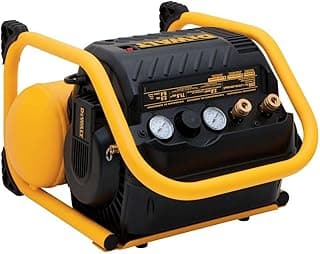
⭐ Best Premium: DEWALT DWFP55130 Quiet 200-PSI Trim Air Compressor