Buying Guide
Performance: PSI and airflow (CFM)
Roofing nailers need steady pressure and enough airflow to drive a rapid series of nails. When evaluating compressors, focus on sustained airflow (CFM) at the pressure your nailer requires rather than just peak PSI. Check your nailer’s manual for required CFM at a working pressure-many roofing nailers expect consistent performance near 90 PSI.
- Look for a compressor that can recover quickly between shots so you’re not waiting on the roof.
- Pancake and wheelbarrow models often deliver usable pressure for roofing without excessive bulk.
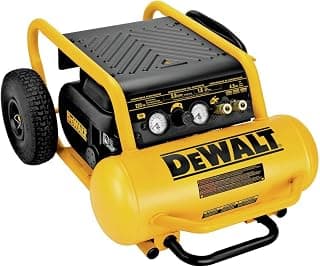
- Example: the DEWALT Pancake Air Compressor is a common choice because it combines a compact tank with higher max PSI for quick recovery on short bursts.
Tank size and duty cycle
Tank capacity influences how long you can run tooling before the motor kicks in to refill. For long stretches of nailing, a larger tank or a compressor with a high-duty cycle reduces motor starts and keeps pressure stable.
- Smaller tanks are lighter and recover quickly if the compressor has good CFM; larger tanks give longer continuous runtime.
- For crew or extended roofing days, prioritize models with a robust duty cycle and larger tanks-6-gallon pancake compressors are a popular middle ground.
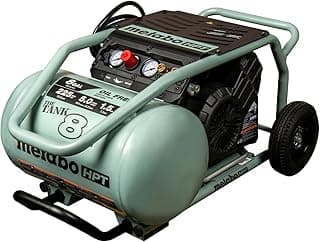
- Example: if you want extra headroom and tank capacity, consider the Metabo HPT THE TANK (6-Gallon), which is built for heavier framing and roofing use.
Portability and weight
Roofing work demands compressors that are easy to move between trucks, ladders, and rooflines. Weight, overall footprint, and how the compressor carries or wheels matter more than raw capacity when mobility is required.
- Choose pancake-style tanks or twin-stack verticals for a low center of gravity and easier handling on uneven surfaces.
- Consider integrated handles, tool trays, and wheel kits if you frequently move the compressor up and down job sites.
- If you often work solo or on smaller roofs, prioritize a lighter unit over a marginal increase in tank size. For other options and reviews, see our best air compressor for construction guide.
Noise level and user comfort
Noise affects comfort on the job and your ability to hear coworkers and safety signals. Quieter compressors make long days less fatiguing, especially when working close to other trades or in residential neighborhoods.
- Look for compressors labeled as “quiet” or with decibel ratings if noise is a priority.
- Oil-free pumps can be quieter and require less maintenance-helpful for contractors who want dependable, low-upkeep gear.
- Example: models marketed for quiet operation, like the Metabo HPT Quiet 1-Gallon, are worth considering if noise and portability are both important. You may also want to explore the best air compressor for home garage options for quieter models.
Durability, maintenance, and serviceability
Roofing environments are harsh-dust, exposure, and frequent transport shorten the life of lesser-built compressors. Look for robust construction, corrosion-resistant tanks, and easy-to-access components for routine checks.
- Decide between oil-free (lower maintenance) and oil-lubricated (often longer-lasting under heavy load) pumps depending on your usage patterns.
- Check warranty terms and availability of replacement parts and service centers in your area.
- Inspect fittings, pressure switches, and drain valves for ruggedness-these small parts determine longevity in the field.
Value and useful features
Beyond basic specs, practical features improve workflow and value for roofing pros: dual regulators, easy-to-read gauges, quick couplers, integrated hose storage, and thermal protection are examples.
- Dual regulators let you run a nailer at one pressure while testing tools at another.
- Durable quick couplers and accessory kits reduce setup time and minimize leaks on the roof.
- Balance price against expected duty and resale value-sometimes a slightly pricier, better-built compressor saves money in downtime and repairs.
FAQ
What is the best air compressor for roofing that can run long hours?
For long roofing days you want a unit with a larger tank, strong recovery and a high max PSI so nailers don’t bog down between shots. Pancake-style 6-gallon compressors balance portability with enough reserve air for most roofing nailers. If you need a reliable, widely used example, consider the DEWALT Pancake Air Compressor (6 gallon, 165 PSI) for steady performance on the job. Pair it with the correct nailer and hoses rated for your tool’s required CFM to avoid short cycling. Always check duty cycle recommendations if you expect continuous heavy use.
Should I choose an oil-free or oil-lubricated compressor for roofing?
Oil-free compressors are lighter, need less routine maintenance and are great for portable, intermittent roofing work. Oil-lubricated models tend to be more durable under heavy continuous use and often have longer service life when maintained properly. For most roofing contractors who move between jobs and run framing or roofing nailers intermittently, an oil-free pancake or portable unit is convenient and low-maintenance. If you frequently run high-demand tools all day, consider an oil-lubricated model and follow the manufacturer’s maintenance schedule to maximize lifespan.
Are premium air compressors worth the extra cost for roofing contractors?
Premium compressors can be worth the investment if you rely on faster recovery, higher CFM, and rugged components that reduce downtime on busy job sites. Higher-end models often have better cooling, heavier-duty pumps and improved seals that handle continuous framing and roofing work more reliably. For contractors who need that extra durability and performance, a model like the Metabo HPT THE TANK (6 gallon, 200 PSI) is an example of a premium pancake compressor built for heavy use. For occasional or light roofing work, a mid-range unit will usually deliver the best value.
What features matter most when buying an air compressor for roofing?
Prioritize tank size and the compressor’s CFM at the working PSI of your nailer-those determine how long you can fire before the motor runs. Portability features like weight, handles or wheels matter when you’re moving the unit across a roof. Look for quick-connect couplers, a reliable pressure regulator, and a durable pump and tank finish to withstand jobsite conditions. Noise level and duty cycle are also important if you work in residential areas or run the compressor for extended periods. For a broader perspective, check out our best air compressor for framing recommendations.
How long do roofing air compressors last and what maintenance do they need?
Lifespan depends on build quality and usage; a well-maintained contractor-grade compressor can last many years, while lighter consumer units may wear out sooner under heavy use. Basic maintenance includes draining the tank after each day to prevent moisture corrosion, replacing or cleaning intake filters, and checking belts or fittings per the manual. Follow the manufacturer’s service intervals-changing oil on lubricated pumps and replacing worn seals will extend life significantly. For assembly, most pancake and portable units arrive preassembled or require minimal setup; always review the included manual before first use to ensure safe operation.
Final Verdict
After testing and comparing the top air compressors for roofing, the strongest models separated themselves by delivering consistent CFM at working PSI, durable pumps and tanks, quick recovery times, and easy jobsite mobility. Buyers should prioritize true CFM at 90 PSI, tank size, maximum PSI, noise level, and long-term serviceability for roofing nailers. The best-performing compressors combined dependable airflow under load, rugged build quality, and simple controls that keep nailers firing reliably through a full workday.
🏆 Best Overall: DEWALT Pancake Air Compressor, 6 Gallon 165 PSI
💰 Best Budget: Makita MAC100Q Quiet 1-Gallon Oil-Free Air Compressor
⭐ Best Premium: Metabo HPT THE TANK 6-Gallon 200 PSI Pancake Air Compressor