Buying Guide
Performance: CFM and PSI
For framing nailers you need a compressor that delivers enough pressure (PSI) and continuous airflow (CFM) to drive a full strip of nails without frequent pauses. Look for a unit whose rated CFM at 90 PSI meets or exceeds your nailer’s requirement; higher peak PSI helps with rapid firing and higher-framing tasks. A more powerful pump also recovers faster after a long burst of nails, which keeps your workflow smooth on the jobsite. For more details on selecting the right unit, see our best air compressor for construction guide.
- Tip: Match the compressor’s rated CFM at 90 PSI to your nailer’s specified CFM under load, and allow a small buffer for hoses and fittings.
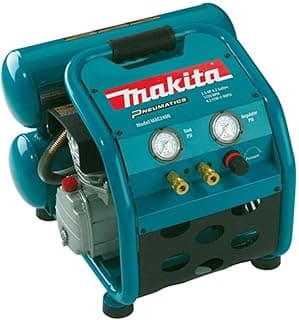
- Example: If you want an all-around performer for heavy framing work, consider the Makita MAC2400, which users often cite for steady delivery on larger jobs.
Tank size and recovery time
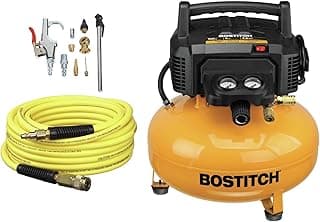
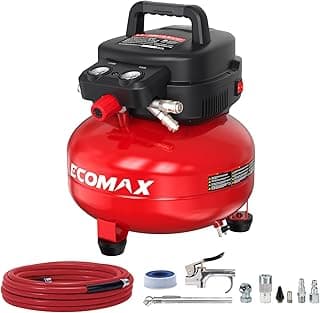
Tank capacity affects how many nails you can shoot before the motor runs to refill the tank. Larger tanks mean fewer motor cycles and steadier pressure during continuous nailing, while smaller tanks recover faster and are lighter to carry. For framing, a 6-gallon pancake or similarly sized tank is a popular compromise between runtime and portability.
- Tip: If you do long framing days, prioritize a larger tank or a compressor with a strong pump that has quick recovery.
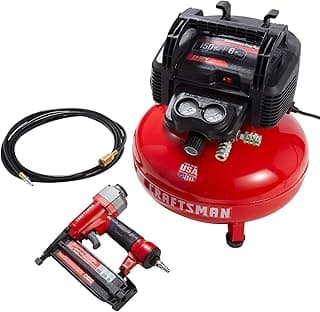
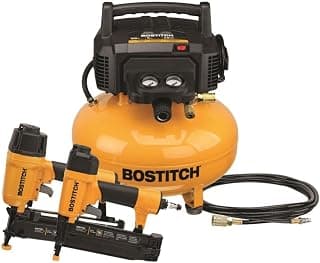
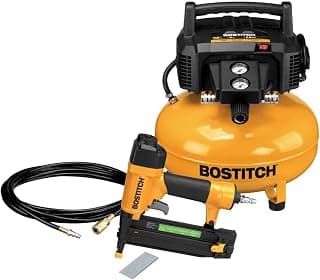
- Value example: Budget-friendly pancake compressors such as the portable 6-gallon models offer good runtime for the price-look for reliable pump performance and a solid recovery rate.
Portability and weight
Framing often happens on ladders, scaffolds, or remote parts of a site, so a compressor’s weight, footprint, and carry features matter. Pancake-style tanks and compact vertical units are easier to lift and fit in a truck than heavy twin-tank models. Consider the handle design, wheel configuration, and overall balance to reduce fatigue when moving the tool around. For tips on portable options, refer to our best portable air compressor for construction review.
- Tip: If you need frequent mobility between floors or sites, choose a compact pancake compressor with a convenient handle and a footprint that fits your truck or van.
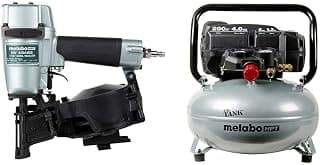
- Example: Portable pancake compressors like the 6-gallon class are common choices for framers because they balance capacity and portability-models such as the Metabo HPT EC914S are positioned for that mix of runtime and ease of transport.
Noise level and jobsite comfort
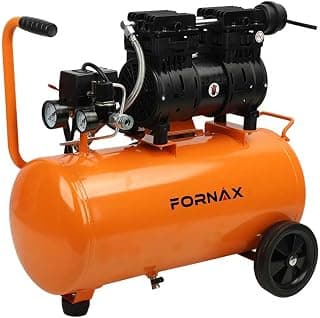
Noise matters on residential jobs, inside structures, and when working near neighbors. Quieter compressors improve communication on site and reduce hearing strain. Manufacturers sometimes publish dB levels; lower numbers indicate quieter operation, though actual noise can vary with load and mounting. If you work in tight or enclosed spaces, prioritize a quieter model.
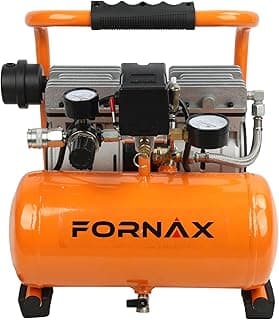
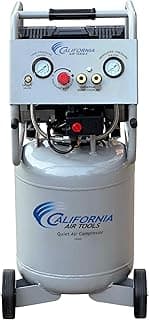
- Tip: If noise is a top concern, check models marketed for quiet operation-some compact oil-free compressors emphasize low dB ratings for this reason.
- Quiet example: For quieter operation on finish- or site-sensitive jobs, a purpose-built quiet model such as the Metabo HPT EC28M is worth considering for its low-noise focus.
Durability, maintenance, and value
Framing compressors take abuse on jobsites, so build quality and serviceability matter. Look for sturdy tanks and reliable pressure switches, and consider how easy it is to access fittings, drains, and wear items. Oil-free pumps reduce routine maintenance, while oil-lubricated pumps can offer longer life under heavy use; choose based on how intensively you’ll run the tool and your willingness to perform upkeep. More insights about compressor types can be found in our best air compressor for air tools guide.
- Tip: Inspect warranty terms and the availability of replacement parts-these factors affect long-term value more than the initial price.
- Tip: If you rent occasionally or work light-to-moderate framing, an oil-free, low-maintenance compressor can save time; for daily heavy framing, a more serviceable, heavy-duty pump may be a better long-term investment.
FAQ
What compressor specs should I look for to run a framing nailer all day?
For heavy framing work prioritize sustained air delivery and recovery: a compressor that maintains pressure at the nailer’s operating PSI and has a strong CFM output will give the most consistent drives. Tank size helps smooth pulses between firings, while a more powerful motor or a twin-cylinder pump improves recovery time. Portability matters if you move between jobs, but don’t sacrifice duty cycle for light weight. If you want a reliable all-around choice for jobsite framing, consider a proven workhorse like the Makita MAC2400.
Oil-free vs oil-lubricated compressors - which is better for framing?
Oil-free compressors are lighter and require less day-to-day maintenance, making them handy for occasional or trim work. Oil-lubricated models usually last longer under continuous heavy use and stand up better to the high-duty cycles of framing. If you run a framing nailer all day on commercial jobs, an oil-lubricated unit is often worth the extra service needs. For weekend projects or lighter use, an oil-free portable model is more convenient and still gets the job done.
Are expensive compressors worth it if I only do occasional framing?
It depends on frequency and tolerance for downtime: a premium compressor will deliver faster recovery, better longevity, and quieter operation, but those benefits matter most with heavy, daily use. For occasional framing, a mid-priced, well-reviewed pancake or portable unit typically offers the best value and is easier to store and transport. Look for solid customer reviews and a good warranty rather than paying only for brand prestige. A budget-friendly, job-capable example to consider is the Metabo HPT EC914S.
What features matter most when choosing a compressor for a framing nailer?
Focus on CFM at 90 PSI (to match most framing nailers), tank capacity for fewer stops to refill, and a motor/duty cycle rated for continuous or frequent use. Portability features-weight, handles, and wheel kits-matter on job sites, while noise level can be important in residential areas. Also check outlet types, quick-connect fittings, and whether replacement parts and service are readily available. Those practical features will determine daily usefulness more than cosmetic extras.
How long do portable compressors last and how can I extend their lifespan?
A well-maintained compressor can last many years; heavy commercial use shortens that, while occasional use in the right conditions can extend it. Regular maintenance-draining the tank after use, keeping filters clean, changing oil on lube models, and inspecting fittings-prevents rust and wear. Store the unit in a dry, temperate place and follow the manufacturer’s service schedule to avoid premature failure. If long-term reliability is a priority, consider models designed for durability such as the Makita MAC320Q.
Final Verdict
After testing the top options for framing nailers, the strongest compressors separated themselves by delivering sustained airflow at operating pressure, rugged pumps, and tank capacity that matches continuous nailing-while weaker models fell short on build quality, duty cycle and ergonomics. Prioritize CFM at 90 PSI, tank size, noise level, portability and pump type (oil-lubed vs. oil-free). The best performers combined consistent sustained airflow, durable construction and simple controls for fast, uninterrupted framing work.
🏆 Best Overall: Makita MAC2400 Big Bore 2.5HP Air Compressor
💰 Best Budget: Metabo HPT EC914S 6 Gal Pancake 200 PSI Compressor
⭐ Best Premium: Metabo HPT EC28M Quiet 1 Gal Oil-Free Compressor