Buying Guide
Pressure (PSI) and Airflow (CFM): match the compressor to your tools
Look beyond tank size and check the compressor’s maximum pressure (PSI) and its airflow rating (CFM) at the pressure your tools require. Trim nailers and brad guns need far less airflow than framing nailers or paint sprayers, so pick a unit that can sustain the CFM your most demanding tool needs without long recovery times. For a higher-pressure pancake option, consider the DEWALT Pancake Air Compressor (6‑Gal, 165 PSI) as an example of a model that provides elevated PSI for tougher jobs.
- Check CFM at the working PSI (often listed at 90 PSI) rather than only peak CFM.
- If you run tools back-to-back, prioritize higher sustained CFM or faster recovery.
Tank size and recovery time: gallons matter for runtime
Pancake compressors typically come in small, shallow tanks (often 1-6 gallons). Larger tanks store more air and reduce how often the motor runs, improving runtime for repetitive tasks. A 6‑gallon pancake is a common compromise for DIYers who want better recovery without a large footprint. Remember that a bigger tank doesn’t increase CFM - it only increases how long you can run a tool before the motor refills the tank.
- Choose 1-2 gallon units for occasional single-tool use and tight storage spaces.
- Choose 6 gallons if you need longer continuous runtime for finish work or multiple quick shots.
Noise and jobsite comfort: quieter compressors reduce fatigue
If you spend long hours near the compressor-inside a garage, on a jobsite, or indoors-noise level becomes an important comfort and safety factor. “Quiet” models use sound-dampening designs and different motor arrangements to cut decibel output. For quieter operation in tight spaces, the Makita MAC210Q Quiet Series is an example of a small, oil-free compressor engineered for low noise. Consider the placement of the unit and whether you’ll wear hearing protection for extended use.
- Look for “quiet” or decibel ratings if you’ll work in noise-sensitive environments.
- Smaller, oil-free models often run quieter but may trade off recovery speed.
Portability and footprint: size, weight, and handling
Pancake compressors are popular because their low, wide tanks are stable and easy to carry. Still, weight and overall footprint vary-if you move the compressor often, prioritize compact, lightweight designs and convenient handles. For tight storage or frequent transport, twin-stack or compact models can be easier to stow. The Ingersoll‑Rand Twin‑Stack is an example of a compact design aimed at portability without sacrificing output.
- Check the unit’s listed weight and whether the handle is ergonomic for two-handed lifts.
- Consider where you’ll store it in your vehicle or workshop and measure clearance for the tank shape.
Maintenance, durability, and value: long-term ownership costs
Decide between oil-free and oil-lubricated pumps: oil-free models require less routine maintenance and are ideal for light to medium use, while oil-lubricated pumps can offer longer life under heavy, continuous workloads. Look at build quality-cast components, protected fittings, and reputable brands tend to hold up better. Value isn’t just purchase price: factor in expected lifespan, warranty, and how often parts like pressure gauges or regulators may need replacement. Models positioned as “value” or “budget” can be great for occasional users, while professional-grade compressors often justify the higher upfront cost with durability and better components.
- Choose oil-free for low-maintenance, intermittent use; oil-lubed for heavy daily cycles.
- Compare warranties and read real-world reviews for longevity clues before buying.
For more buying insights, you can also check out the best electric air compressor section for related features and maintenance tips that apply to pancake models.
FAQ
Which pancake air compressor is best for long continuous use?
For longer runs you want a pancake compressor with a decent tank, consistent pressure output, and proven reliability. For many users the DEWALT Pancake Air Compressor is a solid pick because it balances capacity, portability, and service support for regular use. Keep in mind pancake compressors are designed for intermittent duty; if you need hours of continuous operation consider a larger stationary unit. Regular maintenance and cooling breaks will also extend run ability during heavier jobs.
Should I buy an oil-free or oil-lubed pancake compressor?
Oil-free pancake compressors are low-maintenance, lighter, and better for occasional DIY or trim work, while oil-lubed models usually run smoother and can last longer under heavier use. Most pancake-style units on the market are oil-free because they prioritize portability and simple care. Choose oil-lubed only if you expect frequent, hard-duty cycles and don’t mind periodic oil changes. For typical home or jobsite use, oil-free is usually the more practical choice. More on this topic is available in our best oil free air compressor guide.
Are expensive pancake air compressors worth the extra money?
Higher-priced pancake compressors can be worth it if you need quieter operation, faster recovery, or better build quality and warranty support. For example, the Makita MAC210Q Quiet Series is marketed for low noise and reliable performance, which can justify the cost for professionals or shop use. If your needs are occasional trim and brad nailing, a budget-friendly model will usually be sufficient. Match the price to how often and how hard you’ll use the tool rather than buying the top model by default.
What features matter most when shopping for the best pancake air compressor?
Prioritize tank size and the compressor’s CFM/PSI ratings to make sure it supports the tools you’ll run, and check noise level if you’ll use it indoors or in noise-sensitive areas. Portability, quick-connect fittings, and a good regulator gauge make practical day-to-day use easier. Also look at serviceability, warranty, and whether the unit is oil-free for lower maintenance. Finally, read user reviews to confirm real-world reliability before buying. For a broader perspective on compressor types and features, see the best portable air compressor resource.
How long do pancake air compressors last and what maintenance do they need?
Pancake compressors can last many years with basic care; oil-free units are simpler and often good for typical DIY lifespans, while oil-lubed units can last longer if maintained. Drain the tank after each use to prevent corrosion, check hoses and fittings for leaks, and replace intake filters when dirty. Follow the manufacturer’s service schedule-periodic belt or pump checks, oil changes (if applicable), and inspection of safety valves will keep performance consistent. Proper storage in a dry, temperate place also extends lifespan.
Final Verdict
After testing the top pancake compressors, the winners stood out for consistent CFM at working pressure, fast recovery, durable pump and tank construction, and quiet oil-free operation. Weaker options fell short on sustained airflow, build quality, or long-term reliability. Prioritize CFM at your tool’s required PSI, tank size, noise level, and serviceable components-those specs predict real-world usability. The best-performing models combined solid build, dependable airflow, and low maintenance for reliable jobsite and garage use.
🏆 Best Overall: DEWALT Pancake Air Compressor DWFP55126, 6 Gal 165 PSI
💰 Best Budget: Makita MAC700 Big Bore Air Compressor, 2.0 HP
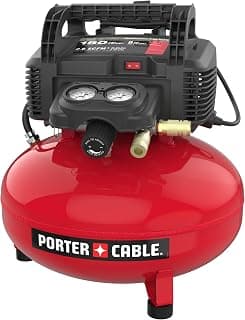
⭐ Best Premium: PORTER-CABLE C2002-ECOM Pancake Air Compressor, 6 Gal Oil-Free