Buying Guide
Noise and motor design
Quiet operation is the core reason you’re shopping for the best quiet air compressor for home garage use. Look for models with low decibel ratings and slow-turning motors - compressors in the 55-65 dB range are noticeably more pleasant in a garage than louder jobsite units. Also prefer oil-free pumps or compressors engineered specifically for quiet operation, which cut vibration and tonal harshness.
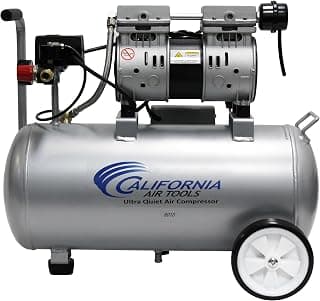
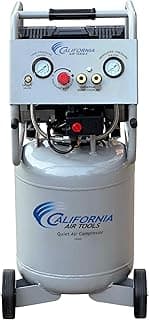
- Check the published dB rating when noise matters. For example, the California Air Tools 8010 lists a 60 dBA rating and is marketed for ultra-quiet operation.
- Consider the duty cycle and intermittent use - even a quiet compressor sounds louder when the motor runs frequently.
Tank size, PSI and airflow (CFM)
Tank capacity, maximum pressure (PSI) and airflow (CFM or SCFM) determine what tools the compressor can run and how long before the motor has to restart. Bigger tanks give longer continuous use between cycles; higher CFM at a given PSI tells you whether a nailer, impact wrench or paint gun will run smoothly.
- Match CFM at the working PSI to your most demanding tool rather than relying on tank size alone.
- Smaller tanks (1-3 gallons) work fine for brad nailers and inflating tires; 6-8+ gallon tanks or higher CFM are better for continuous tasks like spray painting.
- Some value models publish CFM specs - for instance, the VEVOR 13-gallon unit lists 4.6 SCFM @ 90 PSI, which helps you compare against tool needs.
Portability and footprint
How and where you’ll use the compressor affects the ideal form factor. If you need a unit you can move around the garage or carry to the driveway, compact pancake or 1-3 gallon portable tanks are easier to handle. If the compressor will live in a corner and power larger tools, a wheeled 6-13 gallon tank offers more capacity with reasonable mobility.
- Look for wheels, handles or a compact footprint for tight workspaces.
- If space and weight are primary constraints, compact quiet options like the Makita MAC100Q (1-gallon) are designed for easy storage and transport.
Maintenance, durability and pump type
Durability depends on build quality and maintenance needs. Oil-lubricated pumps can run cooler and sometimes last longer under heavy duty, but oil-free designs are cleaner and require far less maintenance - a big advantage in a home garage. Consider corrodation-resistant tanks, accessible drain valves and serviceable fittings when assessing longevity.
- For occasional garage projects, an oil-free compressor typically offers the best balance of low maintenance and long service life.
- Inspect warranties and user reviews for reports of valve or regulator issues - these spare parts determine practical durability.
Value and matching the compressor to your projects
Spend based on the tools and frequency of use. A budget compact unit is usually the best value for light-duty tasks (inflating, stapling, trim nailing). If you plan to run framing nailers, spray guns or air tools for extended periods, investing in a larger, higher-CFM or premium model will save frustration and downtime.
- List your typical tools and check their CFM requirements, then choose a compressor that meets or exceeds those needs at the working PSI.
- Consider warranties, reputation and real-world reviews: premium options can be worth the extra cost if you need frequent, heavy use, while value models serve occasional DIYers well. See our detailed review of the best air compressor for home use for more insights on picking the right model.
FAQ
What is the quietest air compressor that works well in a home garage?
Look for oil-free models marketed as “ultra quiet” with noise ratings in the low 60 dBA range or below for comfortable garage use. The California Air Tools 8010 is a common pick because it advertises 60 dBA, an 8‑gallon tank, and a lightweight, wheeled design that’s easy to move around. Quiet compressors are ideal for finishing work, inflating tires, and casual shop tasks where you don’t want a loud motor running. Keep in mind that very quiet units may have lower continuous airflow, so match noise preference to the tools you plan to run. For a broader look at top picks, check our guide to the best ultra quiet air compressor.
How loud is “quiet” for an air compressor and is ear protection still necessary?
“Quiet” garage compressors usually fall in the mid‑50s to mid‑60s dBA, which is comparable to normal conversation and comfortable for short periods. By contrast, traditional shop compressors often exceed 80 dBA and can be tiring or harmful over long sessions. If you’ll be running the compressor for extended periods or working nearby for hours, use hearing protection whenever noise feels intrusive. Also position the unit outside the immediate workspace or add sound dampening to reduce perceived loudness.
What tank size and airflow do I need for common garage tools like nailers and spray guns?
Match tank size and CFM to how you use tools: small 1-3 gallon units are fine for brad nailers, staplers, and inflating tires, while 6-8 gallon tanks give smoother performance for finish nailers and short burst tasks. Continuous‑draw tools like HVLP spray guns need higher sustained CFM, so look for compressors with higher SCFM ratings or larger tanks to avoid frequent cycling. For heavier or more continuous work you can consider a bigger setup such as the VEVOR 13‑Gallon, which lists 4.6 SCFM at 90 PSI and a larger tank for longer run time. Always check the CFM requirements of your tools and compare them to the compressor’s rated output at the working PSI.
Are oil-free compressors better for home garage use than oil-lubricated models?
Oil-free compressors are generally lighter, cleaner, and require less routine maintenance, which makes them popular for home garages and occasional users. They’re especially convenient if you store or move the unit frequently and want minimal upkeep. For very heavy, continuous commercial use an oil‑lubricated model can offer greater durability, but for most DIYers oil‑free choices from brands like Makita and California Air Tools are practical and reliable. If portability and low maintenance matter most, choose an oil‑free model with a robust build and good user reviews. For a complete comparison, see our article on the best air compressor for shop.
How long should a quiet compressor last and what maintenance extends its lifespan?
A well‑built quiet compressor can last many years with proper care, but lifespan depends on build quality, usage frequency, and maintenance habits. Basic maintenance like draining the tank after each use, inspecting and tightening fittings, cleaning or replacing the air filter, and following the manufacturer’s service schedule will greatly extend life. Store the compressor in a dry, temperate spot and avoid running it beyond its duty cycle to prevent overheating. For buyers prioritizing long life and heavy use, consider models designed for durability such as the Makita MAC700 and follow the owner manual for preventive care.
Final Verdict
Strongest compressors stood out by balancing genuinely low noise, reliable oil‑free pumps, and usable airflow rather than just big tank numbers. Prioritize dBA ratings, CFM at your working pressure, tank capacity, pump type, portability, and build quality. The top performers shared quiet operation, consistent CFM for common garage tools, sturdy tanks and simple controls-giving low disruption, minimal maintenance, and dependable performance for inflation, nailing and occasional spray work.
🏆 Best Overall: California Air Tools 8010 8-Gallon Ultra Quiet Oil-Free Compressor
💰 Best Budget: Makita MAC100Q 1-Gallon Quiet Oil-Free Compact Compressor
⭐ Best Premium: Metabo HPT EC914S 6-Gallon 200 PSI Pancake Compressor