Buying Guide
Use this buying guide to narrow down options for the best quiet air compressor. Below are the most important factors to weigh, with practical tips and real product examples to illustrate trade-offs you’ll encounter.
Noise level (decibels) and real-world quietness
Decibel (dB) ratings are the starting point for evaluating quiet compressors, but context matters: distance, enclosure and surface reflections affect perceived loudness. Look for models rated under about 65 dB if you need a unit that won’t overwhelm a small workshop or disturb neighbors.
- Tip: Compare manufacturer dB specs at the same distance (usually 3-6 ft). A “60 dB” compressor will be noticeably quieter than a “70 dB” unit in close quarters.
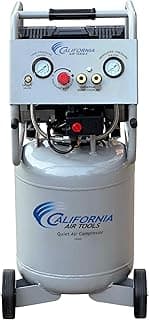
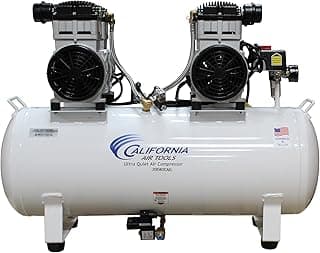
- Example: For ultra-quiet shop work, consider the California Air Tools 2010A, which markets a low noise level suitable for indoor use.
CFM and PSI - match output to your tools
CFM (cubic feet per minute) at a given PSI determines what tools the compressor can run continuously. High-demand tools like paint sprayers and some sanders need more sustained CFM than brad nailers or inflators.
- Tip: Add the CFM requirements of your most demanding tool(s) and choose a compressor that delivers equal or higher CFM at the PSI you’ll use most often.
- Example: If you need higher sustained output for spray work or larger impact tools, a higher-capacity unit such as the Makita MAC2400 illustrates the kind of performance you’ll want to seek.
Tank size, duty cycle and runtime
Tank volume affects how long you can run tools between pump cycles; a bigger tank smooths airflow for intermittent high-demand bursts. Duty cycle tells you how long the compressor can run before needing rest - important for longer jobs.
- Tip: For intermittent nailing or inflating, a small tank (1-3 gal) is fine. For painting or continuous tool use, consider 8-13+ gallons and a higher duty cycle.
- Example: If you want extended runtime without frequent motor restarts, mid-to-large tanks like the VEVOR 13-Gallon Air Compressor are a practical choice for hobbyists and light pro work.
Portability and weight - where you’ll use it
Decide whether the compressor will live in a shop or move with you. Portable 1-3 gallon models are light and easy to carry between jobs, while wheeled 8-13 gallon units strike a balance between mobility and capacity.
- Tip: Look for built-in handles, wheel size and the overall weight rating if you expect to lift it frequently. Compact, low-weight options are best for tight spaces or frequent transport.
- Example: For tight spaces and easy transport, lightweight 1-gallon models are useful-some California Air Tools compact units are designed specifically for portability and low noise. For more options on portable models see our best portable air compressor guide.
Maintenance, oil-free vs. oil-lubricated, and durability
Oil-free compressors are lower-maintenance and preferred for clean applications (finishing, airbrush, medical/food-adjacent tasks), while oil-lubricated pumps can offer longer life and quieter operation at higher loads if maintained properly.
- Tip: If you prioritize low upkeep and indoor quietness, choose an oil-free model with a reputation for durability and easy parts access. For heavy daily professional use, evaluate oil-lubricated options and their service requirements.
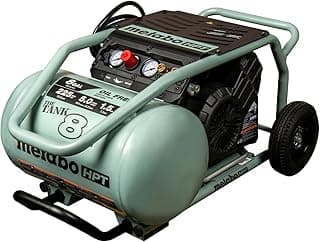
- Example: If longevity and quieter premium operation matter and you want a well-built, low-maintenance unit, look at premium portable models such as the Metabo HPT EC28M as a reference for build quality and features.
FAQ
Which quiet air compressor is best for home and garage use?
For most homeowners who want a balance of power, reliability, and relatively low noise, I recommend the Makita MAC2400. It handles common tasks like tire inflation, brad nailing, and occasional spray work without feeling underpowered. Look for a model with enough CFM for your tools and a tank size that matches how long you need continuous run time. Also consider portability if you’ll move it around the garage. Read user reviews to confirm the noise level meets your tolerance. For more detailed home options, see our best quiet air compressor for home garage guide.
How much does the decibel rating matter when picking a quiet air compressor?
Decibel (dB) ratings give a quick comparison, but perceived loudness depends on frequency and distance too. A compressor rated in the high 50s to low 60s dB is noticeably quieter than a traditional pancake compressor in the 70s. If you plan to work indoors or in a shared space, prioritize lower dB plus rubber feet and a shrouded motor to reduce vibration. Remember that accessories like hoses and couplers can also transmit noise, so use insulated fittings when possible.
Oil-free vs oil-lubricated: which quiet compressor should I choose?
Oil-free compressors are lighter, require less maintenance, and are typically quieter for light-to-medium duty tasks, which makes them great for hobbyists and home shops. A popular quiet oil-free example is the California Air Tools 2010A, which is designed for low noise and easy upkeep. Oil-lubricated units can be quieter under heavy, continuous loads and often last longer in commercial settings if you maintain them regularly. Choose oil-free for convenience and quieter intermittent use, or oil-lubricated for tougher, continuous workloads with scheduled maintenance.
How long do quiet air compressors usually last and how should I maintain them?
Lifetime varies by build quality and how you use the compressor, but well-made units can last many years with proper care. Regular maintenance includes draining the tank after each use, checking and cleaning air filters, and following the manufacturer’s schedule for oil changes on lubricated models. Keep the unit in a dry, ventilated area to prevent corrosion and overheating. Promptly address unusual noises or drops in output to prevent small issues from becoming major repairs.
What size and features should I look for in a quiet compressor for finishing work and nail guns?
For trim and finishing, prioritize CFM at the working pressure of your nailer and a short recovery time; many trim tools run well on small tanks with decent CFM. A lightweight, low-noise model like the DEWALT DWFP55130 is popular for trim work because it balances portability and quiet operation. Look for a universal quick coupler, low dB rating, and a pressure regulator you can fine-tune for delicate finish nails. If you’ll run multiple tools, step up the CFM and tank size to avoid performance dips. For smaller compressors suitable for these uses, our best small air compressor recommendations may be helpful.
Final Verdict
Top picks rose above weaker options by delivering quiet operation together with usable airflow and durable hardware-not just low dBA on paper. Prioritize sustained CFM at working pressure, tank size for longer tool run time, oil-free pumps for low maintenance, and rugged build quality that stands up to shop use. The best-performing compressors combined genuinely low noise, consistent output, and reliable construction, so you get quiet operation without sacrificing the power you need for finishing, nailing, or spraying tasks. For overall excellent options, see our best commercial air compressor page for a broader perspective on quality models.
🏆 Best Overall: Makita MAC2400 Big Bore Air Compressor 2.5 HP
💰 Best Budget: DEWALT DWFP55130 Trim Air Compressor
⭐ Best Premium: Metabo HPT EC28M Quiet Portable 1-Gallon Air Compressor