Buying Guide
Noise level: reading dBA and what matters
Noise rating is the single most important spec for an ultra‑quiet compressor. Look at the decibel (dBA) number manufacturers publish, but treat it as a starting point: ratings are often measured at idle or under light load, not necessarily at full output. As a practical guideline, compressors under about 60 dBA are noticeably quieter and workable in a garage or small workshop.
- Check whether the dBA figure is measured at a set distance (often 3-5 ft) and whether it’s idle or under load.
- Consider the acoustics of your workspace-concrete walls reflect sound more than drywall.
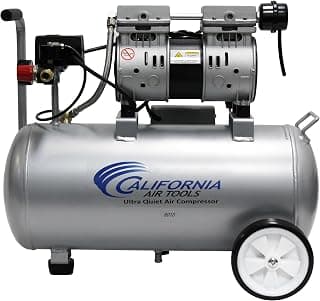
- For a real‑world quiet option, consider the California Air Tools CAT-1P1060S, which lists a 56 dBA rating and is designed for low‑noise operation.
Tank size, CFM and PSI: match performance to your tools
Quiet compressors often have smaller tanks or lower horsepower to reduce noise. That’s fine for brad nailers, airbrushes, and inflating tires, but heavy pneumatic tools need sustained airflow. Focus on CFM at 90 PSI (the most useful comparison) and the tank capacity to understand how long you can run a tool before the motor cycles.
- Smaller tanks (1-2 gallons) are great for intermittent tasks; larger tanks provide longer run times between motor cycles.
- If you use continuous tools (spray guns, grinders), prioritize higher CFM over a lower dBA rating-some tradeoffs are unavoidable.
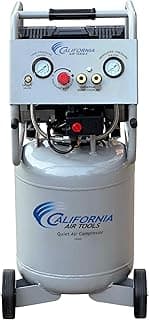
- For a budget‑minded quiet option with a slightly larger tank, see the California Air Tools 2010A (2‑gallon) as a practical example.
Portability and workspace fit
Ultra‑quiet compressors are often chosen for their portability-lightweight units are easier to move and store. Evaluate physical size, weight, handle design, and how you’ll use the compressor in the shop or on the jobsite. A compact, well‑balanced unit reduces fatigue and makes repetitive tasks easier.
- Look for one‑gallon models if you need regular transport; 2-6 gallon tanks stay put better but weigh more.
- Consider hose length and quick‑connect fittings to minimize the need to reposition the compressor mid‑job.
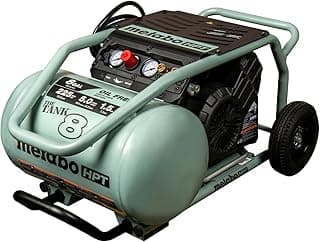
- If portability and low noise are priorities, the Metabo HPT EC28M is an example of a compact, quiet design with user‑friendly couplers.
Motor type and maintenance: oil‑free vs. oil‑lubed
Oil‑free compressors are common in quiet models because they have simpler, low‑vibration designs and require almost no routine lubrication-ideal for hobbyists and light professional use. Oil‑lubed pumps can last longer under heavy, continuous duty but often generate more noise and require periodic oil changes.
- Choose oil‑free for low maintenance, portability, and clean operation (no oil mist). See our guide on the best oil free air compressor models for examples.
- Choose oil‑lubed if you expect heavy daily use and want maximum longevity; be prepared for slightly higher noise and maintenance needs.
- Inspect serviceability-replaceable filters, accessible valves, and clear maintenance instructions extend life regardless of pump type.
Build quality, materials, and long‑term value
Durability affects both noise and ownership cost. Look for quality tanks (steel or aluminum), solid mounting of the motor and pump to reduce vibration, and a reputable warranty. A slightly higher upfront price for better materials and support often pays off through quieter operation and fewer repairs.
- Steel tanks are durable and common; aluminum tanks resist corrosion and reduce weight.
- Check for rubber feet or isolation mounts-these reduce vibration transfer and overall noise.
- Compare warranty coverage and customer service reputation; a reliable brand and good support improve long‑term value.
FAQ
What makes an air compressor "ultra quiet" and how loud is too loud?
"Ultra quiet" compressors use low‑speed motors, sound‑dampening housings, and efficient pump designs to keep noise down; many marketed models sit in the mid‑50s to low‑60s dBA range. For comparison, typical jobsite compressors often exceed 70 dBA, which is noticeably louder and more fatiguing during extended use. Decide what’s "too loud" by where you’ll use the unit - a garage or shared workspace benefits from anything under about 65 dBA. Also check real‑world reviews for noise at operating load, since advertised decibels are sometimes measured under ideal conditions.
Which ultra quiet air compressor should I buy for home or garage use?
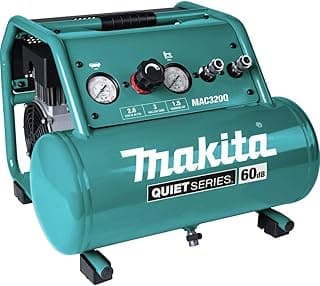
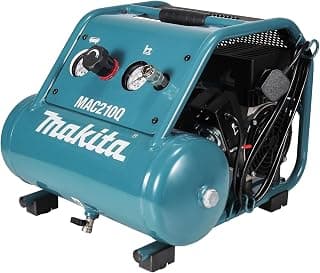
For general home and garage tasks you want a lightweight, oil‑free model with a low decibel rating and enough tank/CFM for your tools; the California Air Tools CAT‑1P1060S is a solid all‑around pick because it balances weight, quiet operation (about 56 dBA), and oil‑free convenience. If you need a compact, well‑built alternative consider models from Makita’s Quiet Series for similar portability. Match tank size and duty cycle to the tools you run most often rather than buying the biggest compressor available. Prioritize reliability and serviceability for long‑term satisfaction. For more options and detailed comparisons, see our article on the best quiet air compressor for home garage.
Are oil‑free compressors quieter and easier to maintain?
Oil‑free compressors are typically easier to maintain because they don’t require oil changes or regular lubrication checks, and many manufacturers use oil‑free designs specifically to reduce maintenance for hobbyists and light contractors. Noise level is influenced more by motor speed, pump design, and enclosure than oil type alone, though many quiet consumer models are oil‑free. The California Air Tools 2010A and several Makita Quiet Series units are oil‑free options that combine low maintenance with lower operating noise. If you need heavy duty, continuous use, research duty cycle and service recommendations since oil‑lubricated units can offer longer life under sustained loads.
What features matter most when choosing a quiet compressor?
Focus on the decibel rating, tank size, CFM at the PSI you’ll use, and duty cycle - those determine how well the compressor handles your tools and how often it runs. Portability (weight and handle design) matters if you move the unit around, while quick couplers and pressure regulators improve day‑to‑day usability. Oil‑free pumps reduce maintenance, and a sturdy tank and quality fittings support long‑term reliability. Read user reviews for real noise performance and durability impressions rather than relying solely on spec sheets. For a breakdown of various styles and builds, check out our page on the best small air compressor.
How hard is assembly and routine maintenance for ultra quiet compressors?
Most quiet, consumer‑oriented compressors arrive nearly assembled - you usually need to attach a handle, drain valve, or quick connect fitting and perform a brief leak check before first use. Routine maintenance is minimal on oil‑free models: drain condensation after use, inspect hoses and fittings, and replace any air filters as recommended. For oil‑lubricated units follow the manufacturer’s schedule for oil changes and check valves; simple upkeep extends tank and pump life. Keep the compressor on a level surface and follow the manual for storage and winterization to avoid avoidable damage.
Final Verdict
After testing, the strongest ultra-quiet compressors separated themselves by combining low decibel operation with reliable oil-free pumps, practical tank size, and solid fittings. Weaker options sacrificed durability or portability for marginal noise gains. Prioritize noise level (dBA), tank capacity, motor power, and build quality when choosing. The top performers all delivered quiet, maintenance-free operation with sturdy construction and straightforward hookups, making them dependable for frequent use without adding weight or complexity.
🏆 Best Overall: California Air Tools CAT-1P1060S 0.6 HP Ultra-Quiet 1-Gal
💰 Best Budget: California Air Tools 2010A 1.0 HP Ultra-Quiet 2-Gal
⭐ Best Premium: Metabo HPT EC28M Ultra-Quiet 1-Gal Portable Compressor